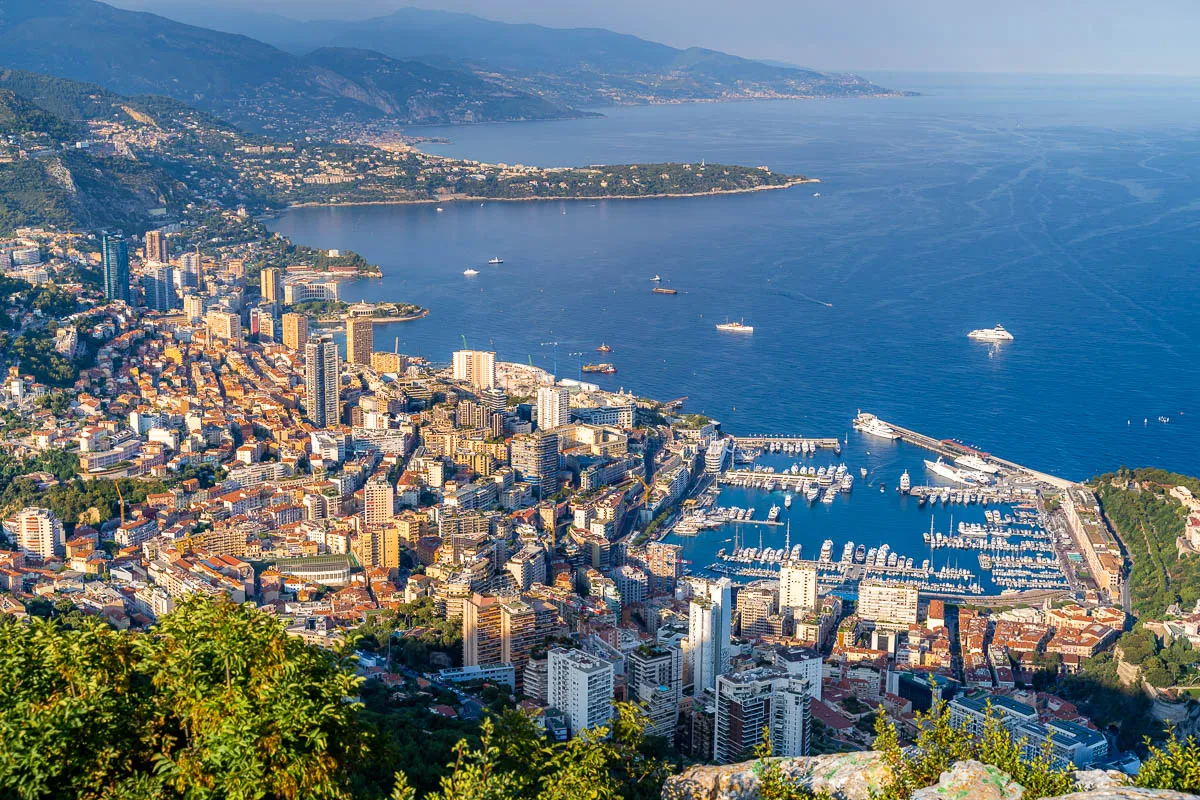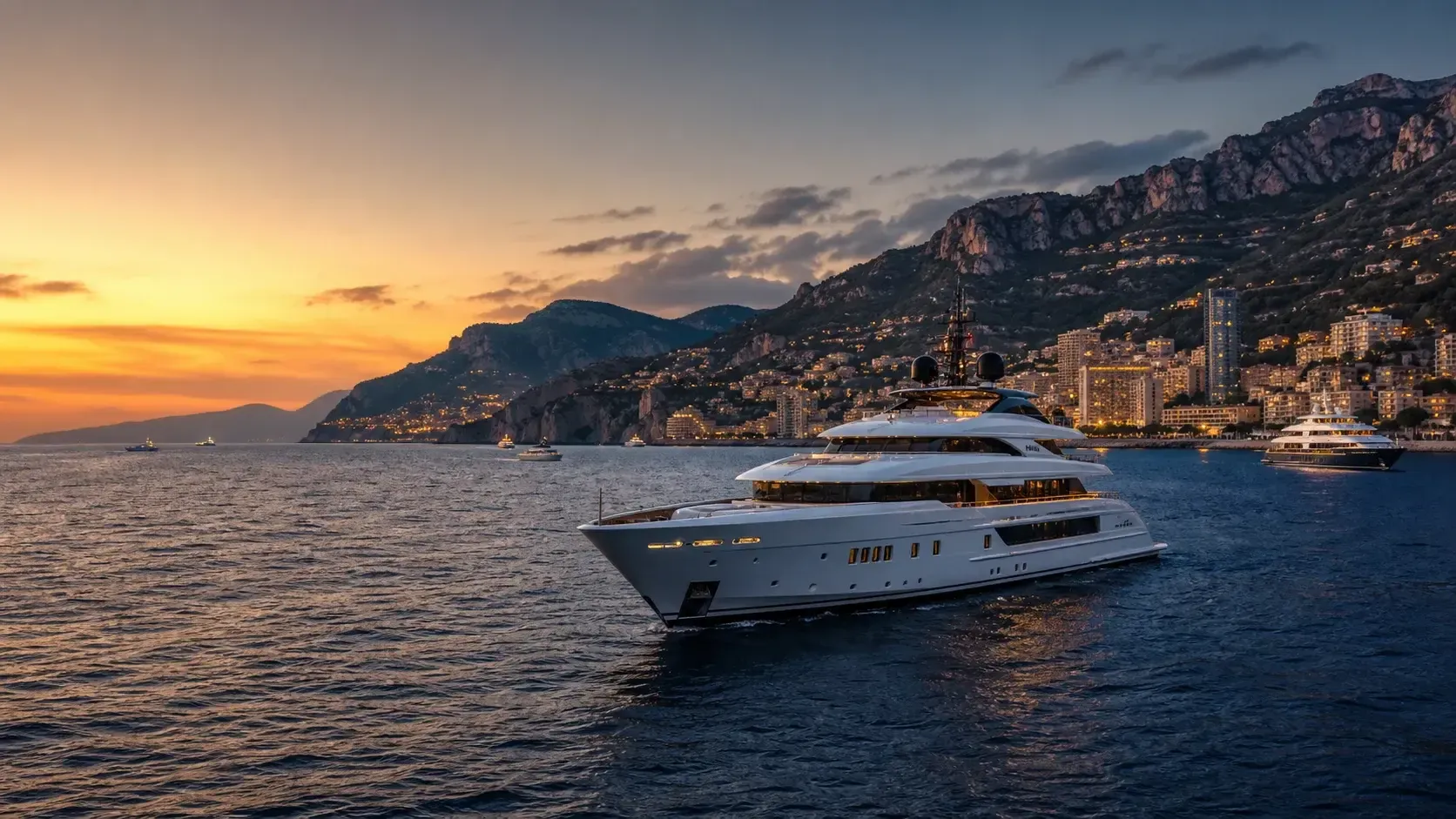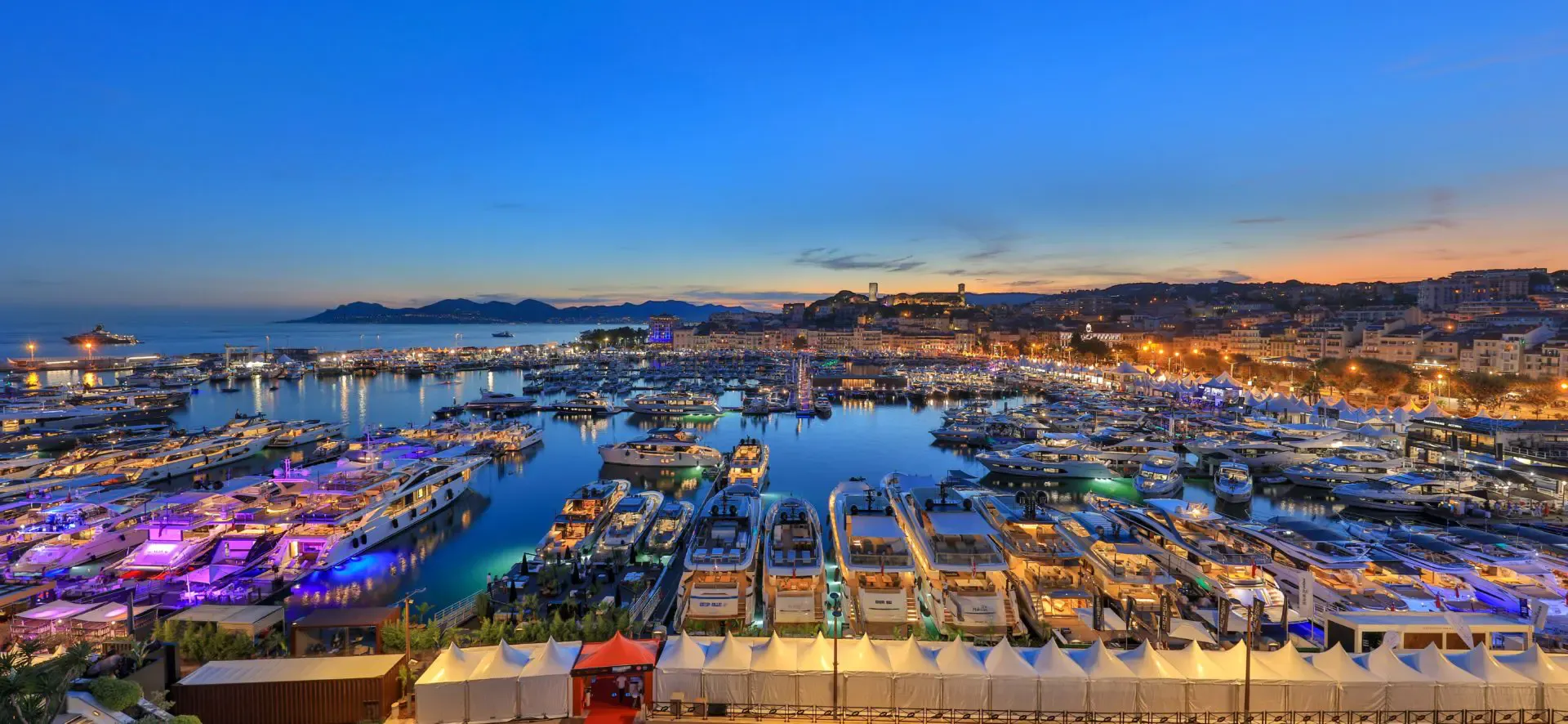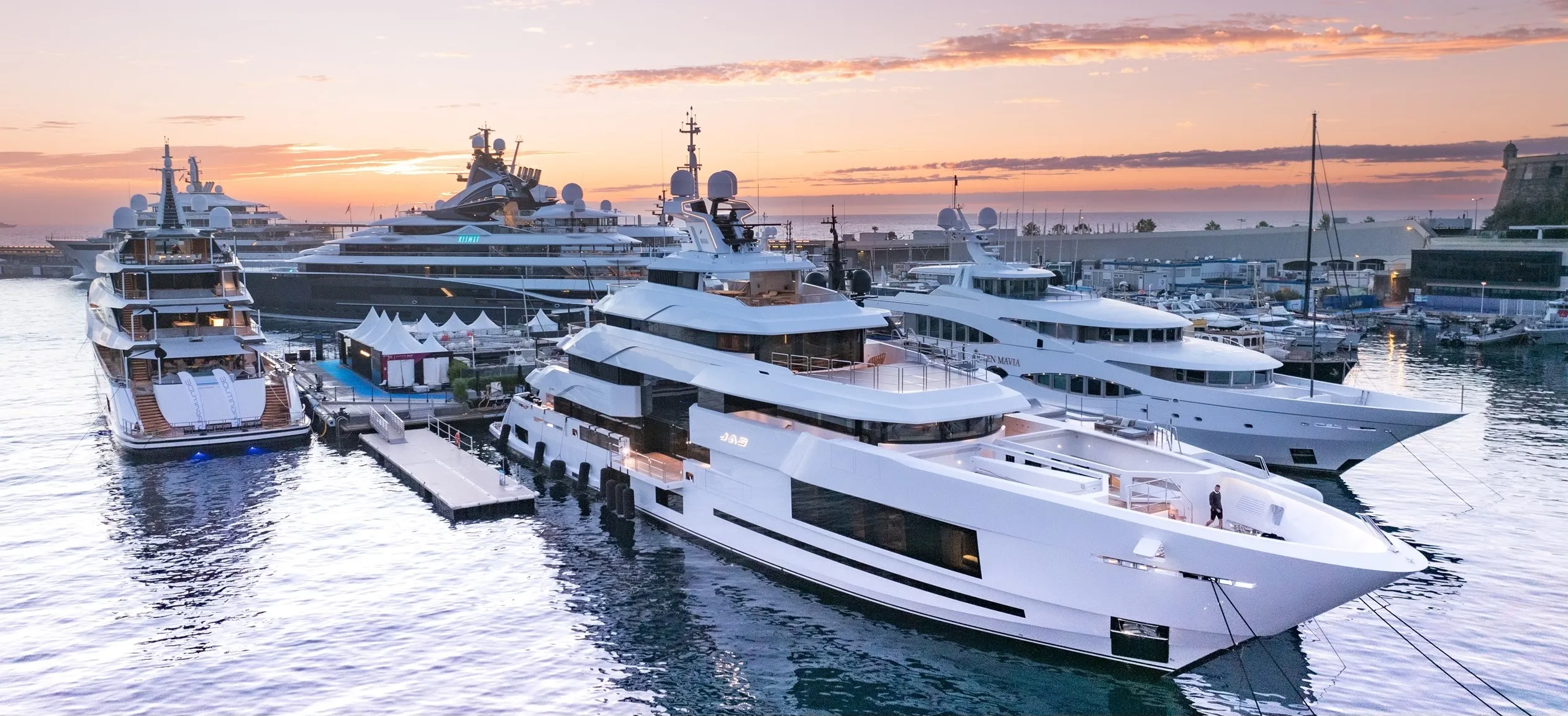
During show week every berth in Port Hercule is committed; arranging one is a months-ahead exercise, not a late decision.
That single fact governs almost everything about attending the Monaco Yacht Show, whether you come to look at yachts or to charter one for the week. For four days each September the harbour stops being a marina and becomes the exhibition itself. Around a hundred and twenty of the largest privately owned yachts on the market are warped stern-to along the quays, the water between them is the show, and the audience arrives by tender as much as by foot. There is no hall and no booth. The 2026 edition runs from Wednesday 23 to Saturday 26 September in Port Hercule.
What the Monaco Yacht Show is
The show is the principal annual meeting of the large-yacht world: the shipyards that build, the brokers who sell and charter, the designers, the captains and crews, and the comparatively small number of owners and charterers who can credibly contemplate a forty-metre-plus yacht. The organisers list over five hundred and sixty exhibitors for 2026, some hundred and twenty superyachts and around fifty tenders afloat, and the week is openly commercial. The yachts on display are not props. Many are genuinely for sale or available to charter, and the introductions made on the quay set the pace of the autumn buying and chartering season.
The harbour is arranged in zones. The Dockside Area holds the superyachts and their tenders along the quays. A separate Sailing Yacht Area gathers the large sailing yachts, and the smaller Adventure Area, the Blue Wake sustainability space and, new for 2026, a Designer Gallery sit alongside. Viewing a yacht is by appointment with the exhibitor and at the exhibitor's discretion; there is no walking aboard on impulse, which is why the shortlist and the diary are worth settling before the week begins.
For a client, the show earns its place for three reasons. It is the most efficient few days of the year to see yachts for acquisition side by side, in the water and in the light that flatters them. It is the natural moment to plan next season's charter, since much of the fleet that will be available next summer is lying on the quay with its captain aboard. And it is where you meet the captains and crews themselves, which is what actually decides the quality of a week on board.
The week on the water
Taking a yacht for show week is a different proposition from a summer cruising week off the Esterel. You are buying position and access for a few intense days, not a fortnight of bays, and the brief to your advisor should be framed that way from the outset.
The reason to be afloat is not transport. Seen from the water the display fleet reads as a whole, and lying off the harbour entrance gives a view no quayside position allows. The aft deck of a well-run yacht is the most useful meeting room in Monaco that week, private and quiet relative to the quays, with a crew who manage arrivals and refreshments without you having to think about it. And with hotel availability stretched and rates at their annual ceiling, a yacht is accommodation fifty metres from the exhibition rather than in traffic above it.
Berthing is the tension. Port Hercule, the deep harbour beneath the Rock, is given over almost entirely to the display fleet; berths that ordinarily host resident and visiting yachts are reorganised around the show's footprint. The number of guest berths inside the harbour during the week is small and allocation is managed tightly around the exhibition layout. Securing one is an application to the Monaco ports authority made well ahead, and the inside berths go first. Port de Fontvieille, the smaller harbour on the western side, takes some of the overflow but is not a like-for-like substitute for a central berth.
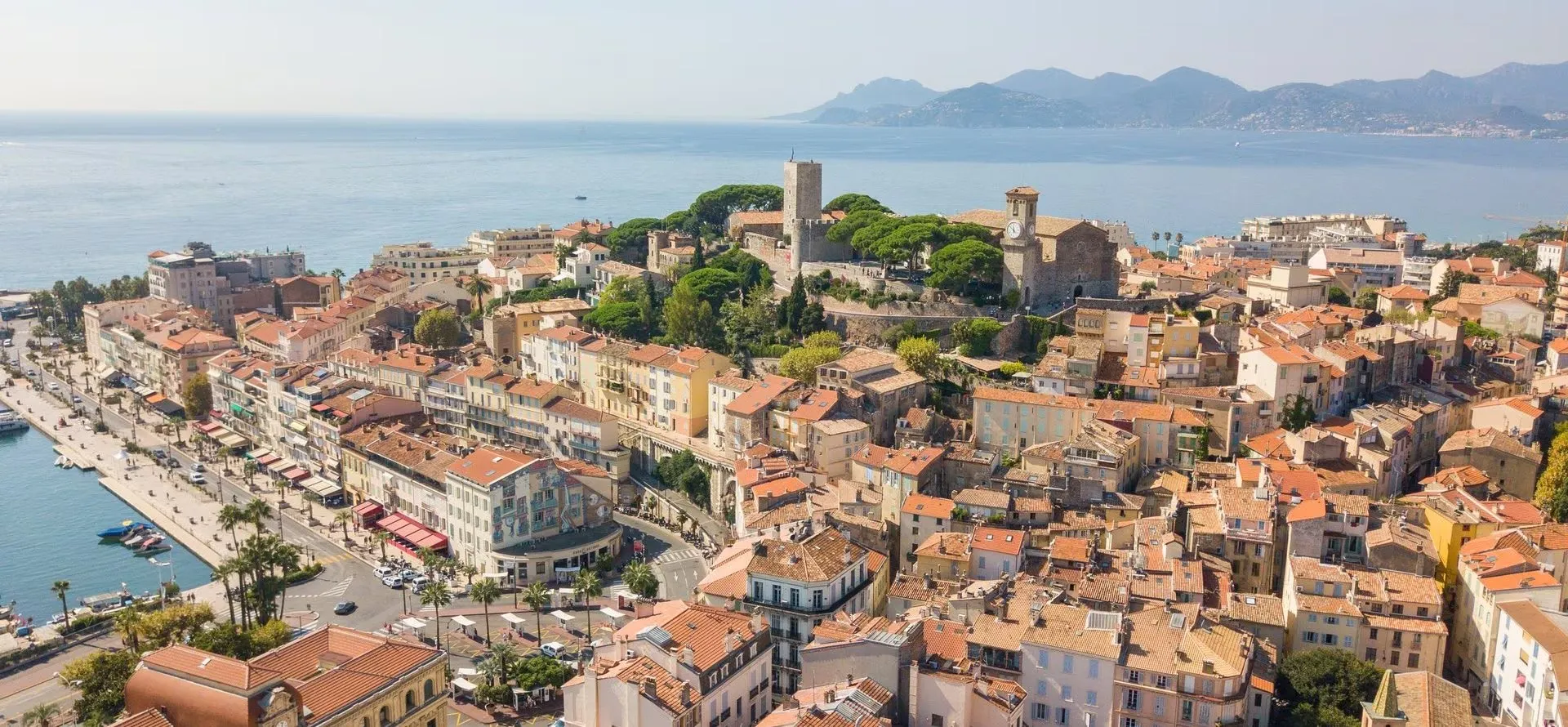
Most of the visiting fleet therefore lies outside, at anchor off the entrance in settled weather or on a mooring nearby, and works the show by tender. That is wholly viable, but it makes the tender and the timing the things that matter. Landing points are busy, access ashore is controlled by pass and by the show's hours, and a practised crew will stage tender runs to avoid the crush at the start and end of each day. Some clients keep a calmer base to the west in reserve; Cannes, an hour along the coast, offers open anchorages if Monaco's density wears thin.
None of this is a drawback, but it needs arranging early. By late September a meaningful share of the desirable fleet is already repositioning towards the Atlantic or heading into a yard period, and the yachts that stay for the show are wanted by exhibitors, charter clients and owners at once. A serviceable charter for show week is best secured months ahead, often by the spring of the same year, and the inside berth earlier still.
How we prepare a client's visit
Balthazar Yachting prepares each client's schedule in advance, identifies the yachts most relevant to their plans and arranges their appointments. In practice that means agreeing the brief first, whether it is an acquisition, a charter for next season or both, and then working the exhibitor list against it: the size range, the layout, the crew, the charter history and the asking terms. Two or three considered viewings a day, with time to compare between them, beats trying to see everything.
Your advisor attends the viewings with you and gives a straight read on each afterwards. Any crew will show a guest the owner's suite; an advisor asks about the yacht's charter record, crew retention and maintenance history, and knows which answers matter. For clients attending by yacht, the same advisor holds the berthing or anchorage plan, the tender protocol and the passes for everyone in the party, so the week runs to the diary rather than to the queue on the quay.
Practical notes for 2026
- Dates and hours. Wednesday 23 to Saturday 26 September 2026. The show opens at 10:00 each day and closes at 18:30 from Wednesday to Friday and at 18:00 on Saturday, with entry closing thirty minutes before.
- Venue. Port Hercule, Monaco, entered from the quays around the harbour. The organisers run free maritime shuttles and electric carts between the zones during show hours.
- Access. Passes are sold online only; there is no sale at the gate. On the opening Wednesday the Dockside Area, where the superyachts lie, is reserved for invited guests and holders of the VIP passes, so a client who wants the quay on the first day needs the right pass arranged ahead. Visits aboard the yachts are by appointment with the exhibitor, arranged through your broker.
- Getting there. Nice Côte d'Azur airport is under thirty minutes by road and seven minutes by helicopter, with a shuttle to the heliport. The train station sits underground in La Condamine with a direct exit for Port Hercule. Drivers are steered to the Salines car park with a free shuttle into the centre; the parking around the port itself is limited and paid.
- Where to stay. Hotels in the Principality are heavily reserved around the show and rates peak. Clients who are not sleeping aboard usually stay along the coast within a short transfer, between Cap Ferrat and Menton, or base further west and come in by car or tender for the day.
The show and the Grand Prix
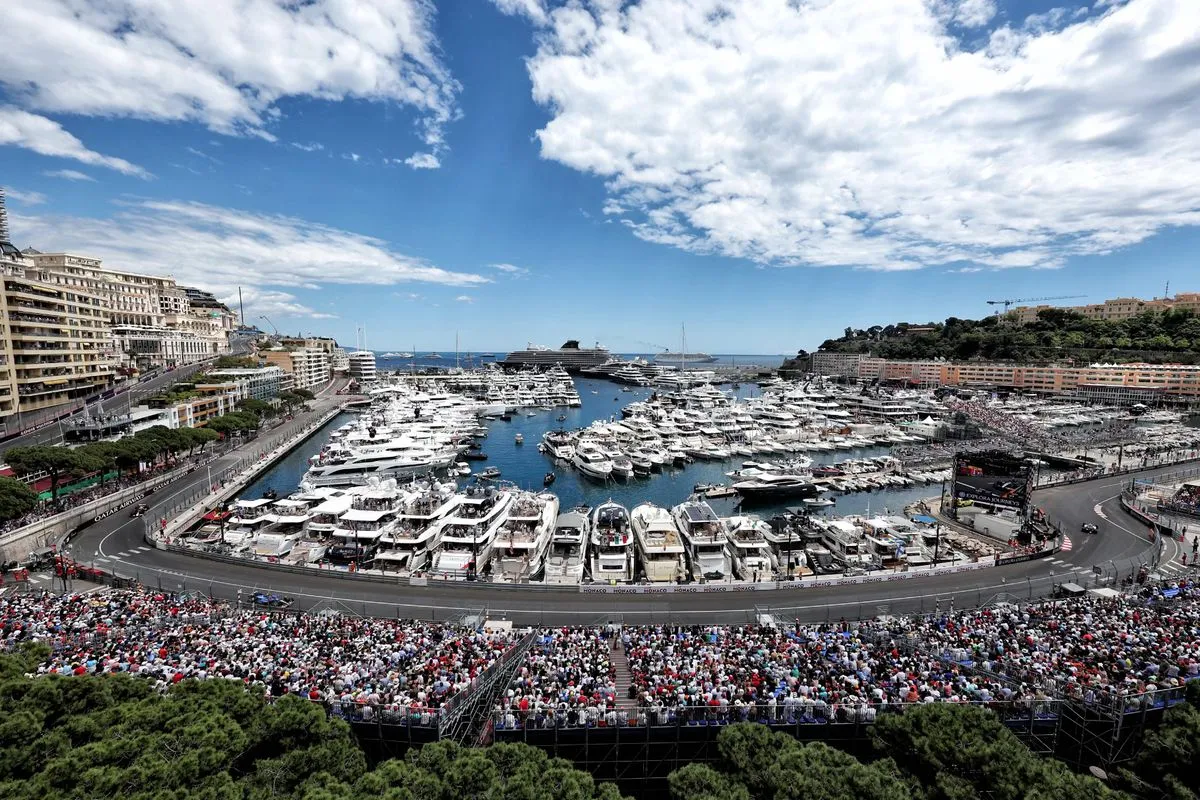
Clients sometimes ask whether show week compares with Grand Prix week in late May. The harbour is equally committed and the berths equally scarce, but the two weeks serve different purposes. The Grand Prix is a spectacle, louder and faster, where the harbour becomes a grandstand. The show is the trade's week, deliberate and commercial, and it is the one to attend if your purpose is a yacht rather than a race. Many clients take in both in the same year; they plan them separately.
The show also pairs naturally with the Cannes Yachting Festival, which runs earlier in the same month an hour along the coast. Taking both on one September itinerary gives a complete read of the market, from the new production yachts at Cannes to the large superyacht fleet at Monaco. For the Principality outside show week, the Monaco charter guide is the companion piece.
Planning takeaway
Treat the berth as the long pole and everything else as solvable around it. Decide by spring whether you want to be inside Port Hercule or working the show by tender from outside, because the inside position is the one that runs out and the one that changes the week most. Frame the brief around access and appointments for a short, intense week rather than around cruising, settle passes and tender logistics before you arrive, and hold a calmer base to the west in reserve. Tell us what you want from the week and we will come back with a schedule, a shortlist and the appointments to match. You can start the conversation here.