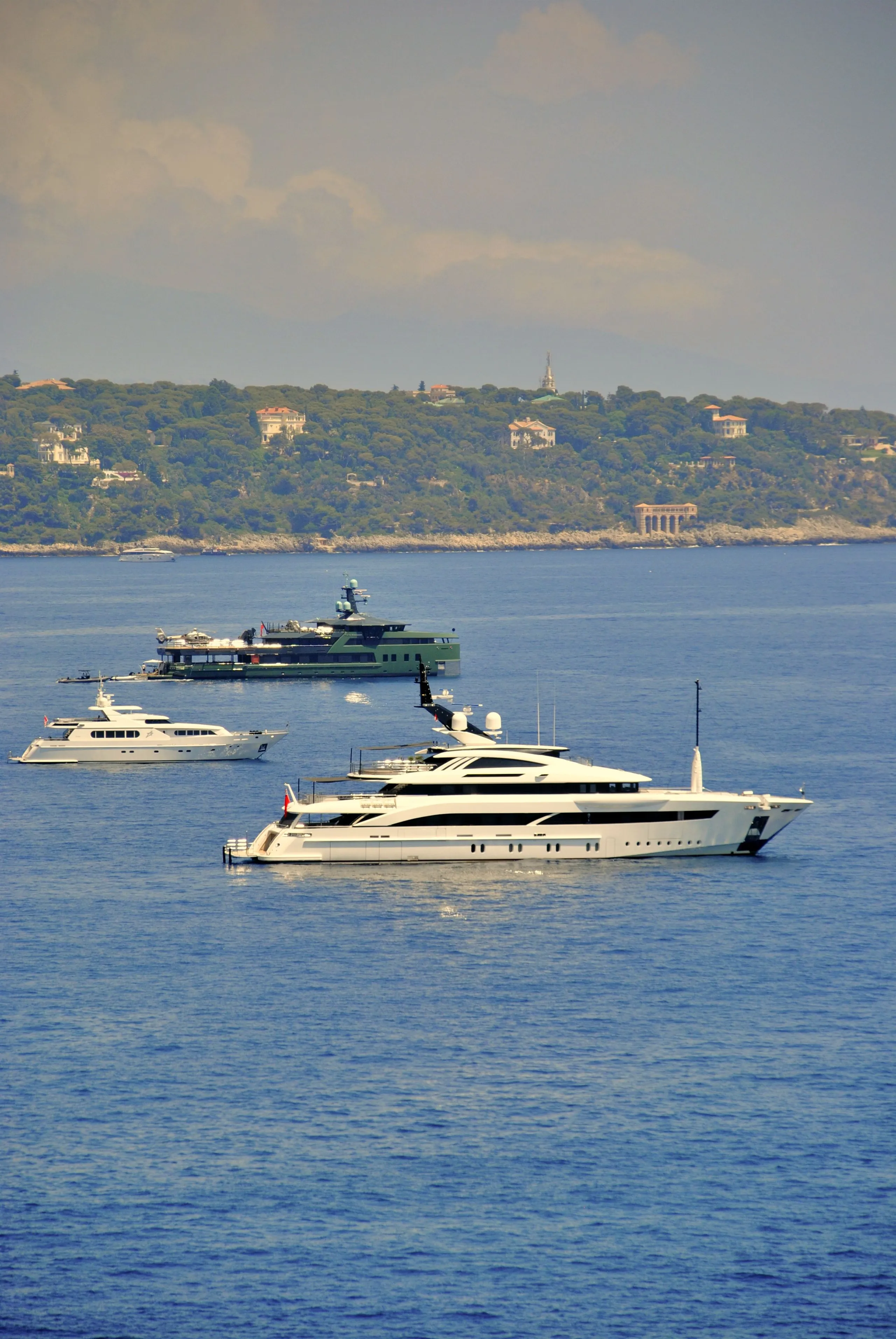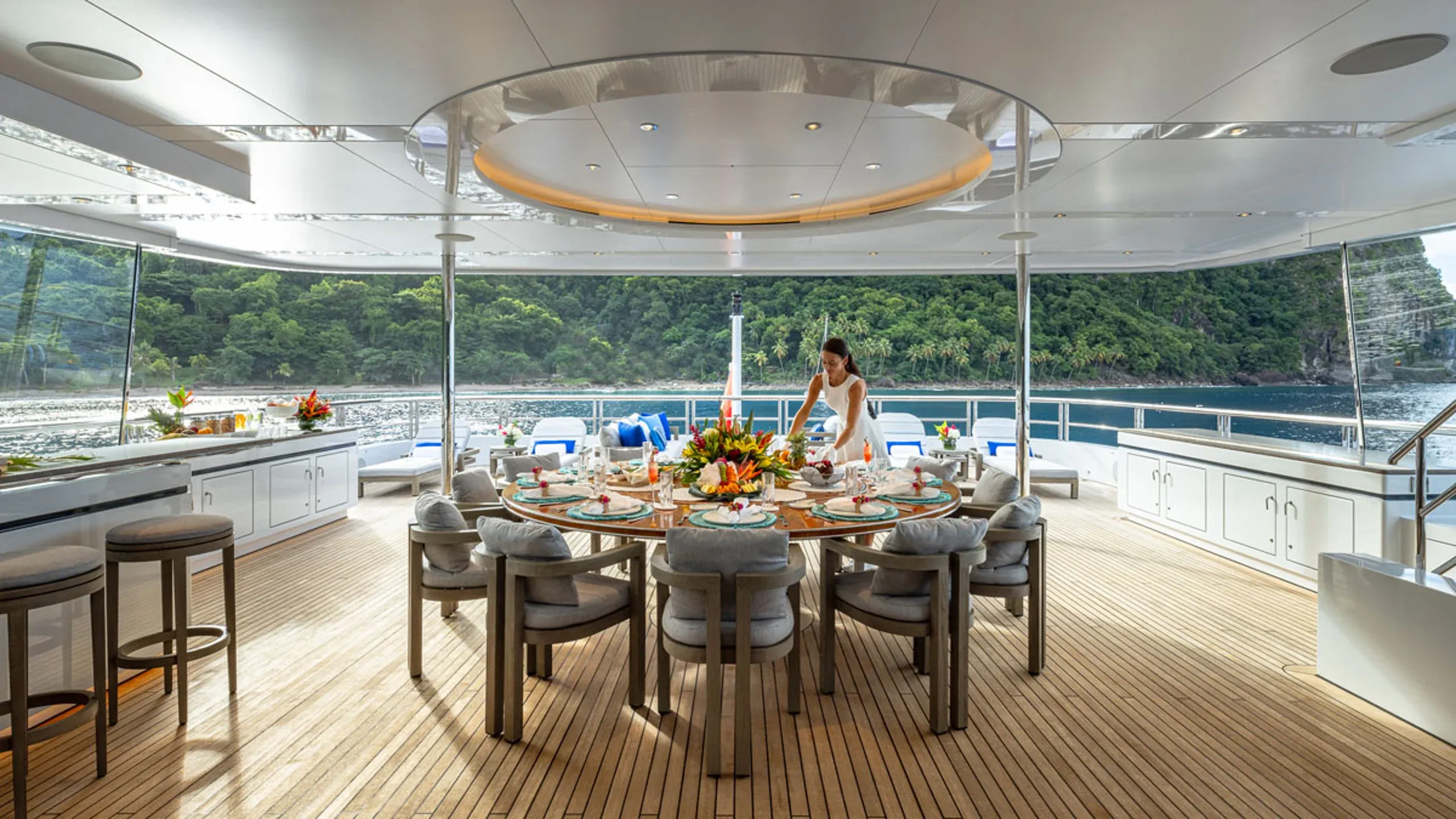
Two yachts of the same length can give entirely different weeks; the deck plan tells you more than the metres.
A forty-metre motor yacht built for transatlantic owners who entertain in port will feel nothing like a forty-metre yacht conceived for a family that lives outdoors at anchor. Same headline number, same berth fee bracket, two different holidays. The length figure is the first thing every brochure leads with and the least useful thing for deciding whether a yacht suits your week. What matters is how that length is divided: where the volume sits, how the cabins are arranged, how much usable deck you get per guest, and whether the boat can actually go where you want to be.
Below is how we read a candidate list when a principal tells us the dates, the guest count and the stretch of coast. The order is deliberate. We start with how people will live on board, not with the spec sheet.
Size, guest count and the space that sits between them
The standard charter yacht sleeps up to twelve cruising guests, a threshold set by the passenger-yacht regulations that most charter boats are built to. Carrying more than twelve in commercial service moves a yacht into a heavier regulatory class, which is why the great majority of the charter fleet caps at twelve. So guest count alone rarely decides the size: a well-laid-out thirty-five-metre yacht and a fifty-metre yacht can both sleep ten, and the difference you are paying for is space per person, not beds.
The measure that actually predicts comfort is volume, expressed as gross tonnage, set against the guest count. Two yachts of equal length can differ by half again in tonnage depending on beam and the number of decks. A beamier, fuller-volume hull gives wider saloons, broader side decks and a main deck you can cross without turning sideways past a sunlounger. A narrow, fast hull of the same length feels tighter the moment all ten guests are aboard at once. When a group is large for the boat, the pinch shows first at breakfast and at sundowners, the two moments everyone is on deck together.
For a sense of how this maps onto pricing tiers and what a week actually runs to, our note on what a charter costs sets out the weekly rate, the advance provisioning allowance and the running extras that move with size.
Layout, and why the deck plan decides the week
This is the part owners under-weight and regret. Read the general arrangement drawing before you fall for the photographs.
Three things on that drawing tell you most:
- Cabin configuration. A master plus four equal doubles suits four couples. The same five cabins as a master, two doubles and two twins (with pullmans) suits two families with children. Getting this wrong means someone sleeps badly all week or a child is housed across the boat from the parents. Count the convertibles: twins that split into singles, and Pullman berths that fold down, are what let one yacht serve very different parties.
- Deck space and shade. Add up the usable open deck, then ask how much of it is shaded at two in the afternoon in August. A sun deck that bakes from eleven to four is half a deck in practice. Bimini coverage, a shaded aft section and a proper sheltered dining spot matter more in the Mediterranean high season than another few metres of teak.
- The beach club. The fold-down platform at the waterline, where it exists, is the single most-used part of a modern charter yacht in warm water. A generous beach club with a swim ladder, shade and somewhere to sit changes how a day at anchor feels. On older or more conventional yachts there is no beach club at all, only a passerelle and a swim ladder off the stern. Neither is wrong; they suit different guests.
The flow between these spaces matters as much as their size. A galley that opens awkwardly onto the only shaded dining area means the crew is in your sightline at every meal. Crew movement, service routes and where guests congregate are all legible from the arrangement drawing once you know to look.
Motor or sail, and the crew behind both
Most charter weeks in the Mediterranean are taken on motor yachts, for plain reasons: more interior and deck volume for the length, level decks, generators that run the air-conditioning and the toys, and an itinerary that holds to a schedule regardless of wind. If your week is about a moving base for beaches, lunches ashore and a stable platform for guests who are not sailors, a motor yacht is usually the honest answer.
A sailing yacht is a different proposition and a deliberate one. Under sail in a steady breeze off the Bonifacio strait or across to the Maddalena, it is quieter, it heels, and the experience is the point rather than the means. The trade-off is real: less beam-for-beam volume, the angle of heel underway, and an itinerary that bends to the wind. Choose sail because you want to sail, not because the photographs looked romantic in a flat-calm harbour.
Crew ratio is the quiet variable that separates a good week from a faultless one. A useful rule of thumb is roughly one crew member per guest at the upper end of the market, easing toward one crew to every two guests on smaller yachts. Below that, service stretches thin at the edges: the moments when guests want a tender run ashore and lunch served and the beach club set up all at once. We weight the captain and chef heavily in any recommendation; on a charter, the chef does more for the week than almost any feature on the spec sheet. The distinction between a standard charter yacht and the fuller-crewed, higher-volume end is the subject of our comparison of superyacht charter versus yacht charter, which is worth reading if your group sits near the twelve-guest line.
Matching the yacht to the actual itinerary
The yacht has to fit the water, not only the guest list. Four practical constraints decide where a given boat can take you.
Range and cruising speed govern how far you roam. A week between Cannes, Saint-Tropez and the Îles de Lérins barely tests any yacht. A passage from the Côte d'Azur to Corsica and Sardinia, or a Naples-to-Capri-to-the-Amalfi run with a leg to the Aeolians, rewards a yacht with the legs and the comfortable cruising speed to make the crossings without burning the whole day.
Draft is the constraint most people never think of until it strands them. A deep-draught yacht cannot tuck into the shallow turquoise off Spargi in the Maddalena or sit close in at Pampelonne, and it will anchor further out, turning every beach lunch at Club 55 into a longer tender ride. If your week is built around shallow anchorages and getting close to the sand, draft belongs near the top of the list.
Tender and toy package is what guests actually touch all day. A serious chase tender or limousine tender makes the run to lunch ashore quick and dry; an underpowered single tender on a busy boat becomes the day's bottleneck. Confirm the inventory in writing: the number and size of tenders, jet skis, the seabob and paddleboards, the inflatable sea pool, and crucially whether the crew is licensed and insured to operate them in the waters you are visiting. Toy lists in brochures are aspirational; the carried inventory for your dates is what counts.
There are exceptions, and we note them where they matter. A short, port-heavy week of nights ashore in Monaco and Saint-Tropez inverts the priorities: the beach club and shallow draught matter less, and the right yacht might be the one that holds the best berths and entertains beautifully alongside. A repositioning or a longer cruise flips them back. The point is to size the yacht to the week you have actually planned, not to a generic ideal of a charter.
What to settle before you sign
Start from the itinerary and the guest list, then let those two facts narrow the fleet. Ask for the general arrangement drawing early, count the convertible berths and the shaded square metres, and confirm the carried tender and toy inventory in writing rather than from the marketing pack. Treat gross tonnage and draft as decisive numbers, and treat length as the headline it is. If you want a structured way into the available fleet, our yacht charter and superyacht charter pages are organised around exactly these questions rather than around the length figure on the cover.
The single most useful habit: when two yachts of the same length are in front of you, put the deck plans side by side before you look at another photograph. The boat that suits your week is almost always the one whose layout matches how your guests will actually spend their days, and that is visible on the drawing long before you step aboard.