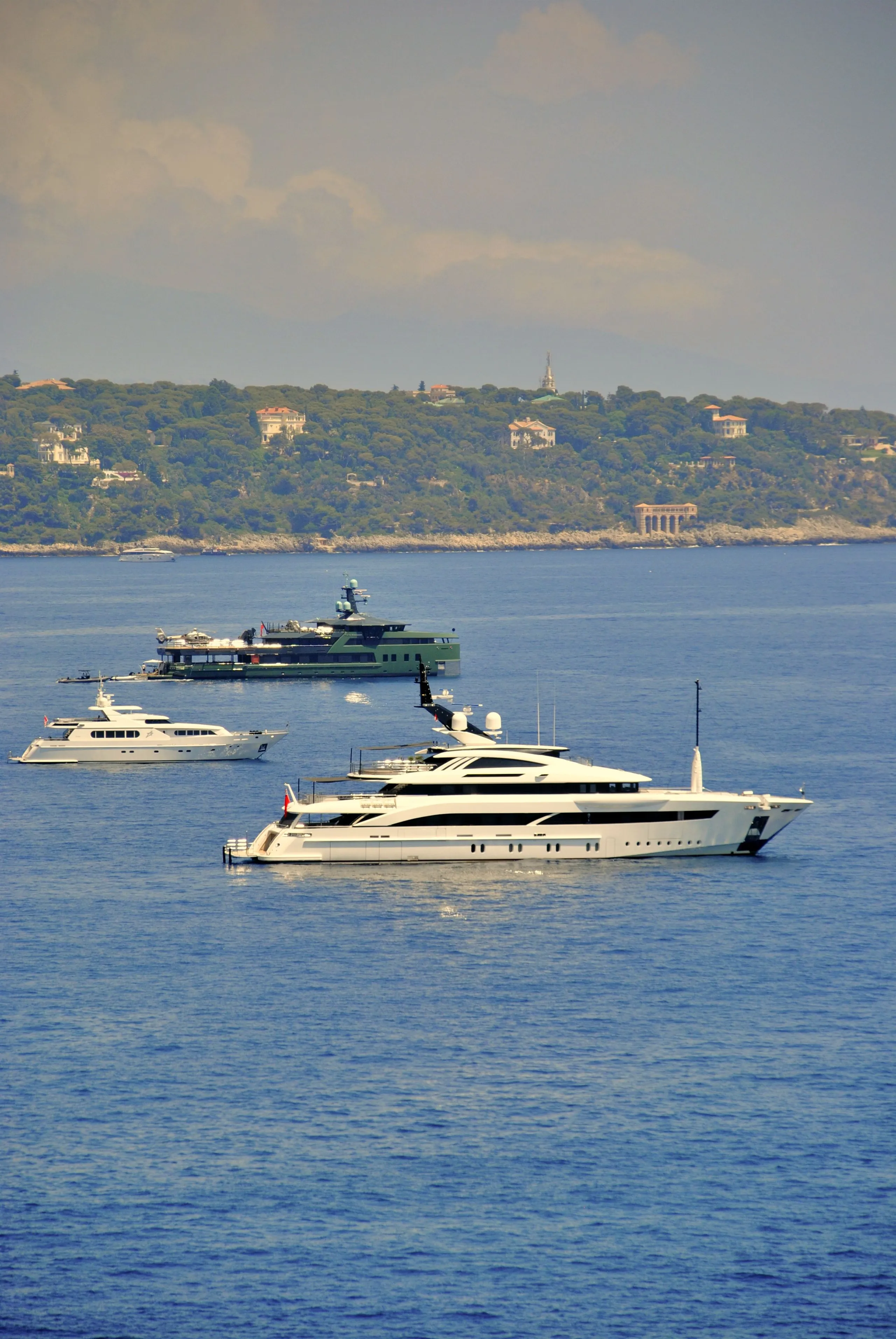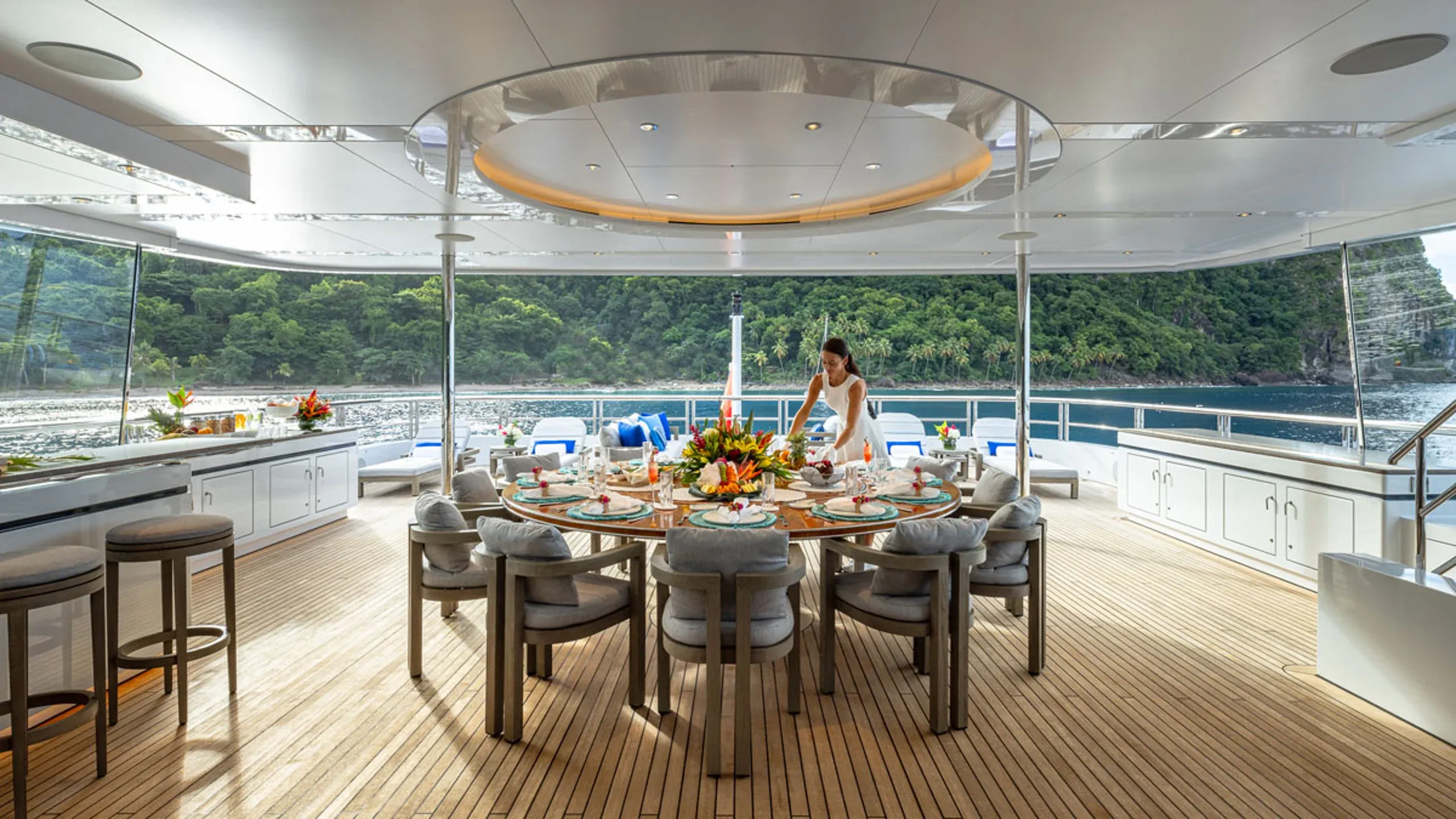
The honest answer is a range, and the range is wide. A week on a crewed charter yacht in the Mediterranean can start near the cost of a fine villa and rise past the cost of a small hotel. What follows is a plain account of how charter pricing actually works: the base rate, the costs that sit on top of it, what is included, and what moves the number up or down. Every figure here is an indicative market range rather than a quote, and every yacht is priced individually.
How is a yacht charter priced?
Almost all crewed charter is priced as a weekly base rate for the yacht and its crew. That rate covers the vessel, the crew's service and the yacht's own insurance. It does not cover the running costs of your particular trip. Fuel, food, drinks, berthing and similar costs are settled separately through the Advance Provisioning Allowance, and tax and gratuity sit on top of the rate again. So the useful question is never only what the weekly rate is, but what the whole week comes to. As a working rule, the all-in cost of a Mediterranean charter lands at roughly 130 to 150 percent of the base rate.
How much does a week on a motor yacht cost?
Indicative Mediterranean market ranges, per week, before running costs:
- 20 to 30 metre motor yachts typically run from around €30,000 to €80,000 per week. This band covers most modern planing and semi-displacement yachts, with four or five cabins for eight to ten guests and crews of three to six.
- 30 to 45 metre motor yachts run from around €80,000 to €250,000 per week. Here you move into larger semi-displacement and full-displacement yachts with five or six cabins, larger crews, and materially more deck space, tenders and toys.
- Above 50 metres, weekly rates start from around €250,000 and climb steeply with size, pedigree and reputation. At this level almost everything is individual and rates are quoted on application.
Sailing yachts typically sit below motor yachts of the same length, reflecting lower running costs and, usually, a smaller crew, though large performance and classic sailing yachts can command motor-yacht money.
Treat all of these as orientation. The rate for a specific yacht depends on her age, condition, crew and calendar, which is why real budgeting starts from a shortlist rather than a table.
What is the APA, and how much should I budget for it?
The Advance Provisioning Allowance, or APA, is the fund the trip's running costs are paid from: fuel, provisioning, drinks, berthing fees, and anything else consumed on your itinerary. It is typically 25 to 35 percent of the base rate, paid before departure and reconciled transparently at the end of the charter, with whatever is unspent returned to you. How it works, what it covers and how to keep it under control is set out in our guide to the charter toolkit: APA, gratuities and contracts.
Do you pay VAT on a yacht charter?
In most cases, yes. VAT applies to charters in EU waters, and the rate varies by country and by cruising area. The applicable rate for your itinerary is confirmed before you commit, and it appears in the charter agreement rather than arriving as a surprise afterwards. Outside the EU, other local taxes and fees can apply. The principle holds either way: the tax treatment follows the itinerary and is settled in writing up front.
How much do you tip the crew?
Gratuity is discretionary and given for good service, which on a well-run yacht is the norm rather than the exception. In the Mediterranean the customary range is 5 to 15 percent of the base rate, handed to the captain at the end of the charter to distribute among the crew. We can tell you what is usual for the size of yacht and the style of trip you have taken.
What are delivery and relocation fees?
If the yacht has to reposition to reach your embarkation port, or to return afterwards, the charterer usually covers some or all of that cost: crew time, fuel and berthing for the delivery legs. Whether a fee applies, and how large it is, depends on where the yacht is based relative to where you want to cruise. Choosing a yacht already positioned in your cruising area is one of the simplest ways to keep the total down, and it is one of the first things an advisor checks when building a shortlist.
What is included in the charter fee, and what is not?
Included in the base rate: the yacht, her crew and their service, the yacht's insurance, and the use of the equipment and toys aboard.
Paid through the APA: fuel for the yacht and her tenders, food and drink, berthing and marina fees, port and customs charges, and personal requests arranged along the way.
On top of the rate: VAT for the cruising area, crew gratuity at your discretion, and any delivery or relocation fee agreed in the contract.
Not covered at all: your travel to and from the yacht, restaurants and excursions ashore, and personal spending. Special requests, such as rare wines or event tickets, are provisioned at cost through the APA.
What makes one charter cost more than another?
For a given yacht, season is the single largest factor. In the Mediterranean, July and August are high season and carry premium rates; June and September offer much the same weather for noticeably less, and the shoulder weeks either side can be better value again. The same yacht can differ meaningfully between a late-June and a mid-August week.
Itinerary matters through running costs as much as through the rate. Long daily passages burn fuel, and marquee harbours in high summer carry berthing fees that reach four figures a night for a large yacht, while a route built around anchorages keeps the APA leaner.
The yacht herself sets the baseline. Age, refit history, builder pedigree, crew tenure and charter record all move the rate, which is why two yachts of the same length can sit at very different prices, and why the cheaper of the two is not automatically the better week.
Party size shapes the value rather than the rate. A charter is priced per yacht, not per guest, so a yacht taken near her maximum, twelve guests on most charter yachts, spreads the same weekly figure across more people than the same yacht chartered by a smaller party, which is worth weighing when you compare options.
Demand also peaks around events. Weeks that coincide with the Monaco Grand Prix, the Cannes festivals or the September shows are taken early, and choice narrows faster than price rises.
How does day charter pricing work?
Day charter follows the same logic in miniature: a base rate for the day, with fuel and catering either packaged in or accounted separately, and the rate scaling with the yacht's size and category, from open day boats to large motor yachts. Rates vary widely by yacht and by port, so day charters are quoted individually. The clearest way to gauge them is to look at the actual yachts: browse the fleet and ask for a like-for-like quote for your date, party and route rather than working from a headline figure.
How do you set a realistic charter budget?
Start from the whole cost, not the headline rate. A practical method: take the weekly base rates of yachts that genuinely fit your party, add roughly 30 percent for the APA, the applicable VAT for your cruising area, and a provision for gratuity, then weigh the total against what the week replaces, from flights and a villa or hotel at the same standard to restaurants and a crewed private venue for entertaining.
This is where an advisor earns their place. Tell us the party size, the dates, the region, whether that is Cannes, the Amalfi Coast or Dubai, and the figure you would like to stay inside, and we come back with yachts that fit it honestly, running costs included, rather than a headline rate that grows by a third once the extras land. If the budget and the wish list do not quite meet, a good advisor says so and shows you what moves: a different fortnight, a neighbouring region, one cabin fewer, or a yacht a few years older with a first-class crew. For a sense of how a week actually paces out, our guide to a week on the French Riviera walks through the routing, and when you are ready you can start the conversation here.