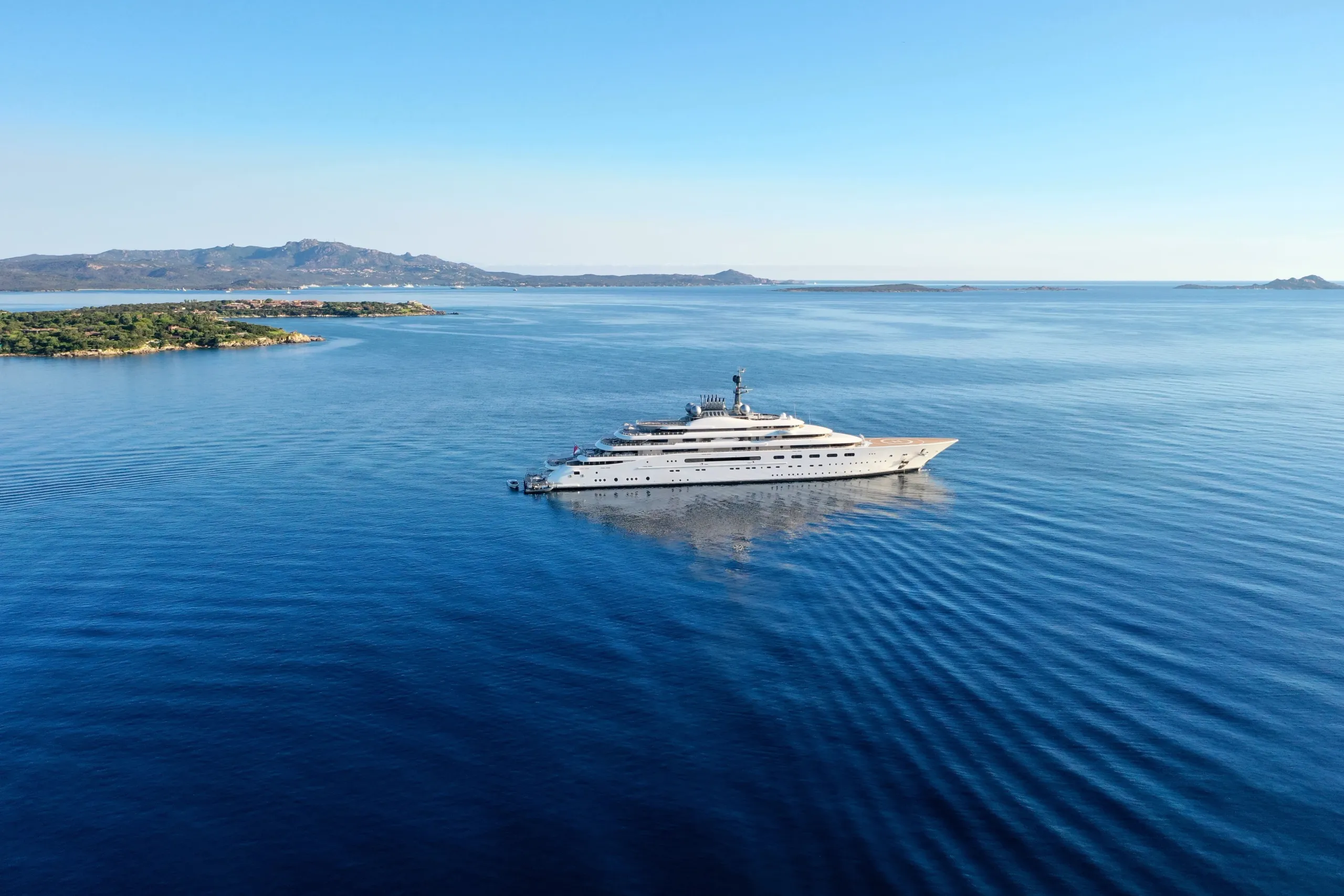
Sardinia is the western Mediterranean's most under-briefed coast: most charter clients only see the northern half and miss the better half of the island. The Costa Smeralda and the Maddalena archipelago account for ninety percent of the published cruising itineraries, and the southern coast from Cagliari around to the south-west is, for most operational purposes, a separate cruising ground.
Porto Cervo on the Costa Smeralda is the headline port, the second-most demanded berthing on the Mediterranean charter map after Monaco, and the anchor of the August Italian-coast calendar. The Maddalena archipelago, immediately north and east, is the principal cruising water. Beyond that, Sardinia opens out into a coastline most weekly charters never reach. The point worth making early is that the island works on two clocks: the Costa Smeralda runs on the high-season Mediterranean calendar that also drives Monaco and Saint-Tropez, while the south runs on its own quieter rhythm. A serious itinerary decides which of the two it wants before the dates are fixed.
Porto Cervo and Marina di Porto Cervo
Porto Cervo is a purpose-built marina village, developed from the early 1960s by the Aga Khan's consortium. The harbour is small relative to the demand (about seven hundred berths spread across the Vecchio and Nuovo basins), and the high-season availability is contracted out almost entirely.
For weekly charters, the working approach in August is either a confirmed Marina di Porto Cervo berth booked at least six months ahead, or the use of Porto Cervo as a daytime stop with anchoring off the Spiaggia del Principe or the Liscia di Vacca and tender-running into town. The latter is by far the more common operational choice. A confirmed Porto Cervo berth for the peak August fortnight is one of the harder pieces of berthing to secure anywhere in the Mediterranean, and we treat it as the first thing to lock rather than the last; everything else in the week plans around whether the boat sleeps in the marina or on anchor.
The town itself is compact: the Sottovento and the Piazzetta hold the principal evening calendar, and the Pevero Golf Club sits behind the marina with the polo grounds beyond. Most charters with a Costa Smeralda brief spend two evenings in port over a seven-night week. The economics reward that restraint: a stern-to night on the Porto Cervo quay in August carries a tariff that few other Mediterranean marinas match, and a yacht that anchors off Liscia di Vacca and tenders in for dinner spends the difference on better wine. The Piazzetta and the Sottovento do not care whether you arrived by passerelle or by tender.
The Maddalena archipelago
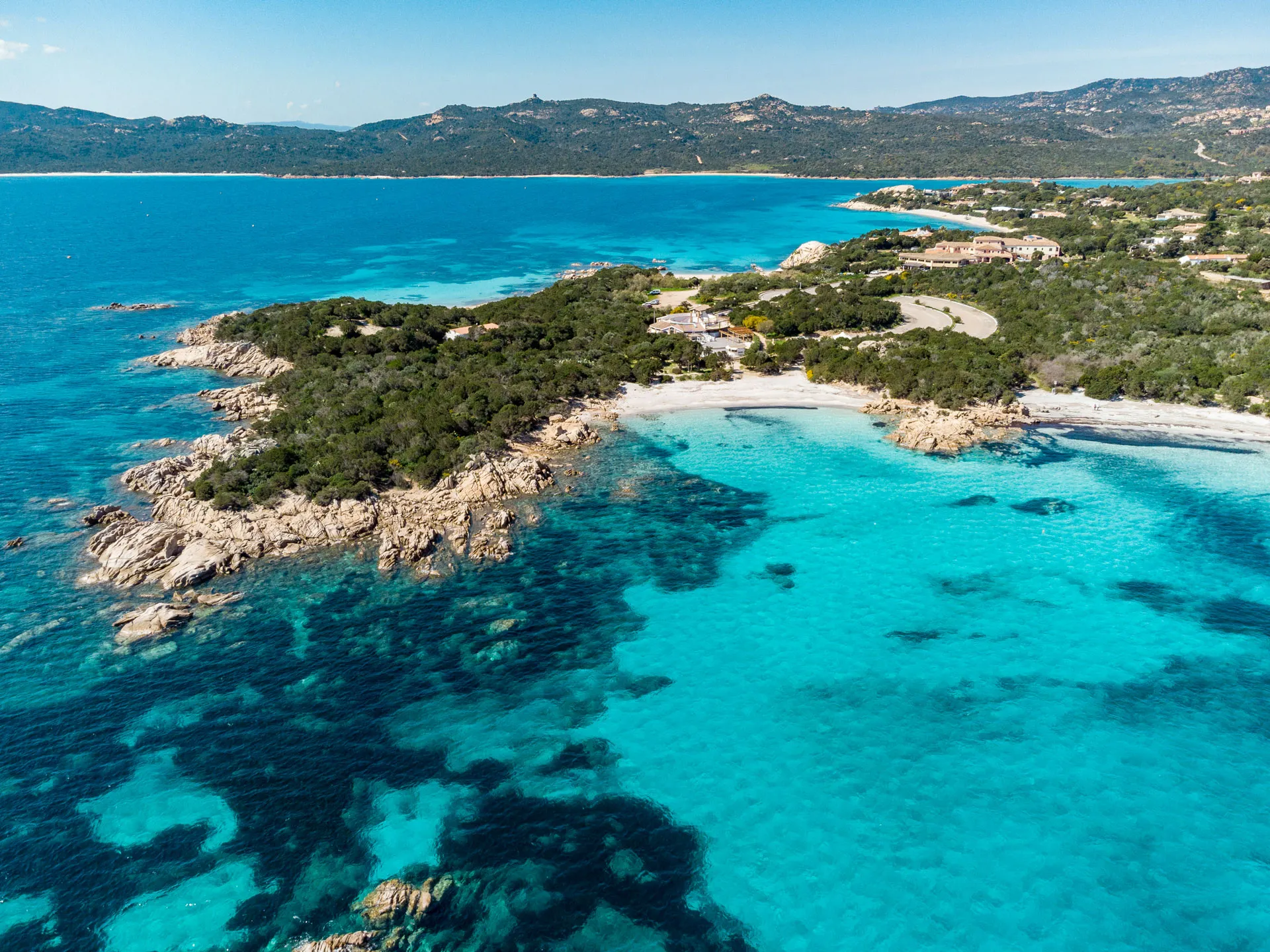
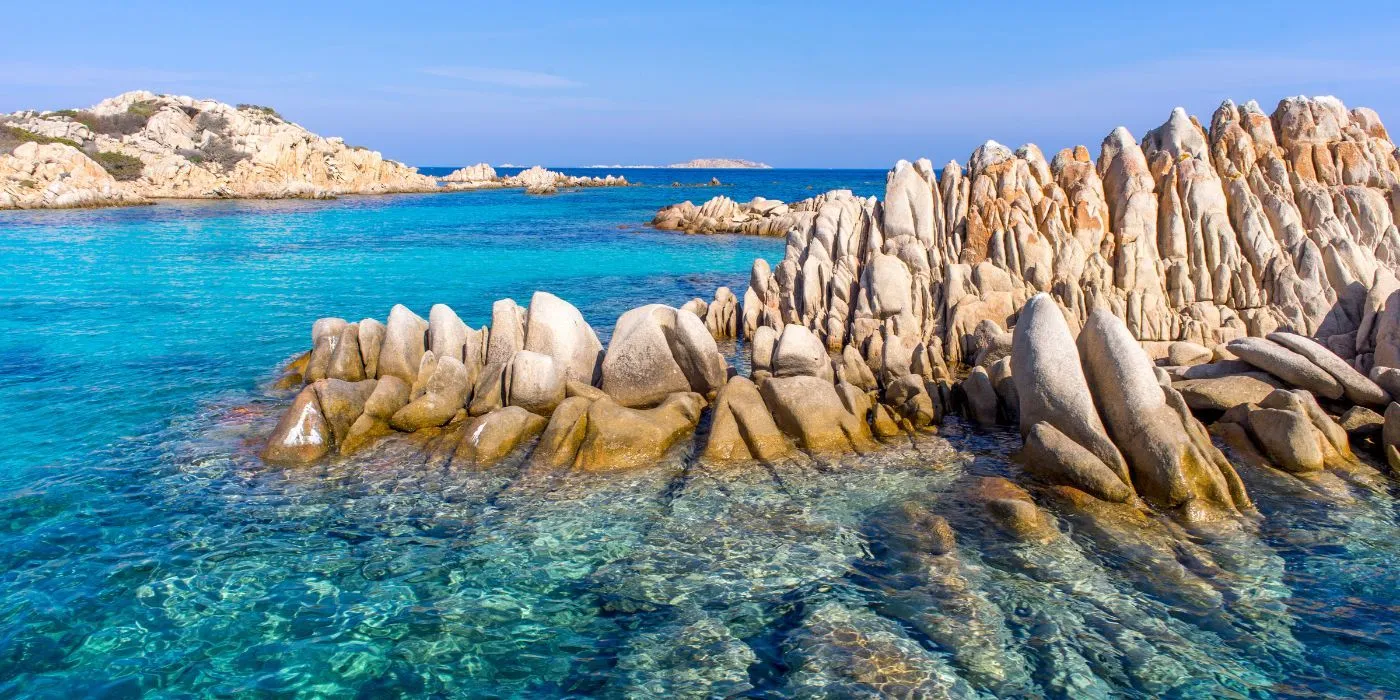
The cruising water immediately north of Porto Cervo, taking in the Maddalena archipelago and the Bocche di Bonifacio between Sardinia and Corsica, is the principal day-cruising ground of the Costa Smeralda charter. The seven main islands of the archipelago all have established anchorages, and the variety of sea state and protected swimming covers any wind direction.
The marquee anchorages (Spiaggia Rosa on Budelli, the Cala Coticcio on Caprera, the Spiaggia del Principe on the Sardinian mainland) are environmentally protected; the no-anchor zones, the maximum-stay rules, and the seasonal restrictions all matter operationally. A captain working the archipelago plans the anchorage rotation around these zones rather than the published "must-visit" list. The whole archipelago sits inside a national marine park, which means a navigation permit and a daily access fee scaled to the length of the yacht, arranged in advance and carried aboard. Spiaggia Rosa on Budelli is closed to landing and the famous pink sand is off limits underfoot, so the visit is a swim and a look from the water rather than a beach stop; guests told that in advance are never disappointed, and guests who expect to walk it always are.
The Bocche di Bonifacio between Sardinia and Corsica is the natural extension. A day cruise from Porto Cervo crosses into Corsican waters at Cavallo Island and rounds the southern tip of Corsica at the cliffs of Bonifacio; a longer-week itinerary spends a night in Bonifacio harbour and a night on the western Corsican coast before returning. The strait itself deserves respect: it funnels the prevailing westerly and can build a short, steep sea in an afternoon, so the crossing is a morning job in settled weather rather than a fixed item on a fixed day. A captain who knows the water reads the forecast and moves the Corsica leg accordingly.
Costa Smeralda's August calendar
The Costa Smeralda compresses its season into about ten weeks, late June through the first week of September. Within that window, the densest period is the second half of August, anchored by the Yacht Club Costa Smeralda regatta calendar (the Maxi Yacht Rolex Cup in early September, with build-up events through late August). For owners and charter guests who want the regatta as spectacle rather than as a competitor, the Maxi week is one of the few times a charter yacht can sit at anchor and watch genuine grand-prix racing pass within a few hundred metres, which is its own reason to time a week to it.
Outside this ten-week window the Costa Smeralda is operationally light. May, June, late September, and October offer the same cruising water in materially calmer conditions: empty anchorages, available berthing, and rates below the August figure. Most operational brokers prefer the shoulder seasons for first-time charterers; the Costa Smeralda in mid-September is closer to what the brand image promises than the Costa Smeralda in mid-August. The trade-off is honest and worth stating plainly: a few of the marquee beach clubs and restaurants wind down after the first week of September, so a late-shoulder week buys calm water and quiet anchorages at the cost of some of the evening scene. For most guests that is the better bargain, and it is the single most useful piece of timing advice we give on this coast.
Southern Sardinia and the Sulcis coast
The southern half of Sardinia (Cagliari, the Cape Carbonara region, the Sulcis-Iglesiente coast, the Costa Verde) is, in operational terms, a separate cruising ground. The water is calmer, the anchorages are less developed, and the tourist traffic is materially lower than the Costa Smeralda. The town of Cagliari has a workable yacht harbour at Marina di Cagliari; the southern cape at Capo Carbonara offers a sheltered anchorage system at Villasimius. Cagliari also has the island's principal airport, which makes it the natural embarkation point for any charter that wants to start in the south and work north, rather than the reverse.
The Costa Verde on the south-western coast, the long uninterrupted run of dunes between Buggerru and Piscinas, is one of the most under-cruised stretches of the Italian coast. Charters that route Sardinia south-to-north over a ten-day window pick up an entirely different yacht-coast register than the Costa Smeralda crowd sees. The Sant'Antioco and San Pietro islands off the south-west corner add a working-harbour character that the Costa Smeralda does not have: tuna ports, Genoese towns, and anchorages a charter can have largely to itself in July. For a returning client who has done the north twice, the south is the more interesting yacht charter the second or third time around.
Sardinia and Corsica together
Most cross-Mediterranean charter itineraries pair Sardinia with Corsica: the two islands sit on either side of the same cruising water, and the operational handoff between Italian and French waters at the Bocche di Bonifacio is straightforward. A ten-day routing pairs the Costa Smeralda with the western Corsican coast and Bonifacio. A two-week routing extends to the southern Sardinian coast and the Sulcis archipelago. Where the longer programmes get genuinely interesting is the link south and east toward Sicily and the Aeolian islands, a passage that turns a single-island week into a proper cruising fortnight for a yacht with the range and a guest list that wants miles rather than the same three anchorages.
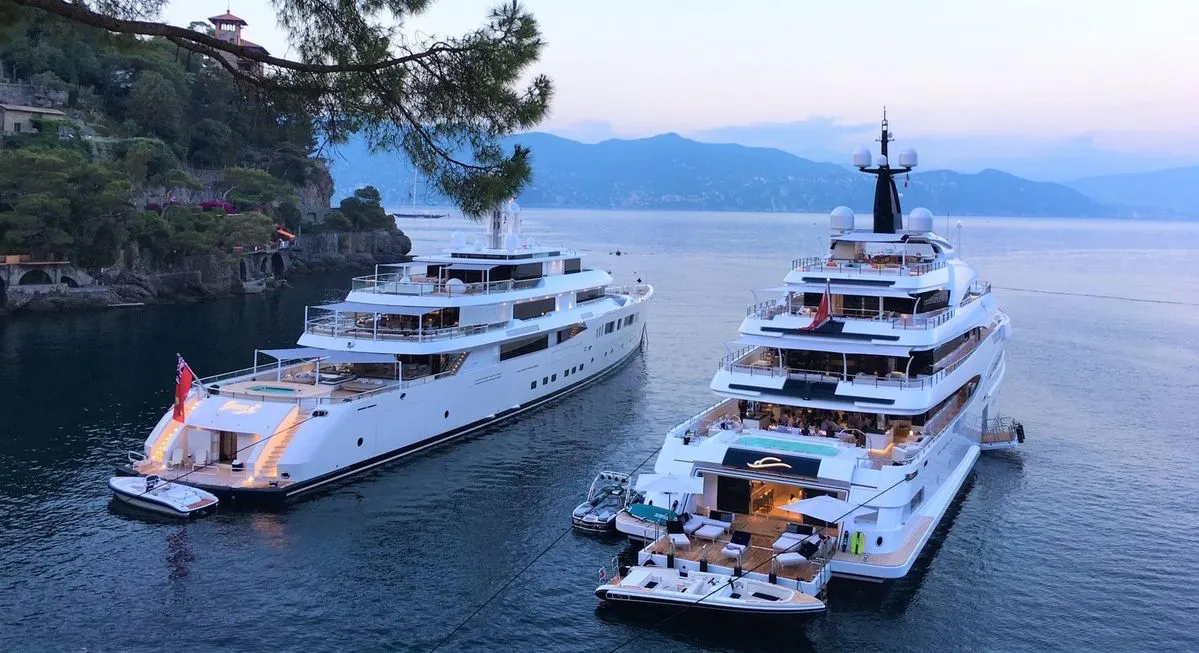
What the published guides do not capture is that Sardinia rewards weeks longer than seven nights. The island is large, the cruising is varied, and the operational handoff between northern and southern programmes is the brief most charter clients miss. Brief for at least ten nights if Sardinia is the primary destination, decide early whether the week is a Costa Smeralda week or an island week, and treat the berth question and the marine-park permits as the first decisions rather than the last. For how Sardinia sits within a wider Italian and French programme, the Mediterranean charter guide is the place to start, and the larger boats that use Porto Cervo's deepwater quay sit squarely in the world of superyacht charter.