The captain's pre-charter brief sets the week, not the rate sheet. Most of what guests will experience is decided in the two weeks before embarkation. The crew structure, the provisioning plan, the routing strategy, the reservation roster, and the contingency thinking are all settled before the principal arrives at the gangway. What follows during the week is the execution of that plan, with the operational flexibility that the plan was designed to support.
This piece sets out how a charter is delivered from the yacht side: the crew roles, the planning sequence, the daily rhythm, and what the principal can do during the brief that materially improves the week.
The crew structure on a large yacht
A typical 50-metre charter yacht runs with a crew of nine to twelve. The structure is broadly consistent across yachts of this size, though the specific role count varies with the yacht's design and operational pattern.
The captain is the operational head and the principal point of contact for the brokerage and the charter party. The first officer (or chief officer) handles the navigation, the deck operations, and the safety-management framework. The chief engineer runs the technical side: machinery, electrical, water, fuel, and the systems that keep the yacht operating. A second engineer assists.
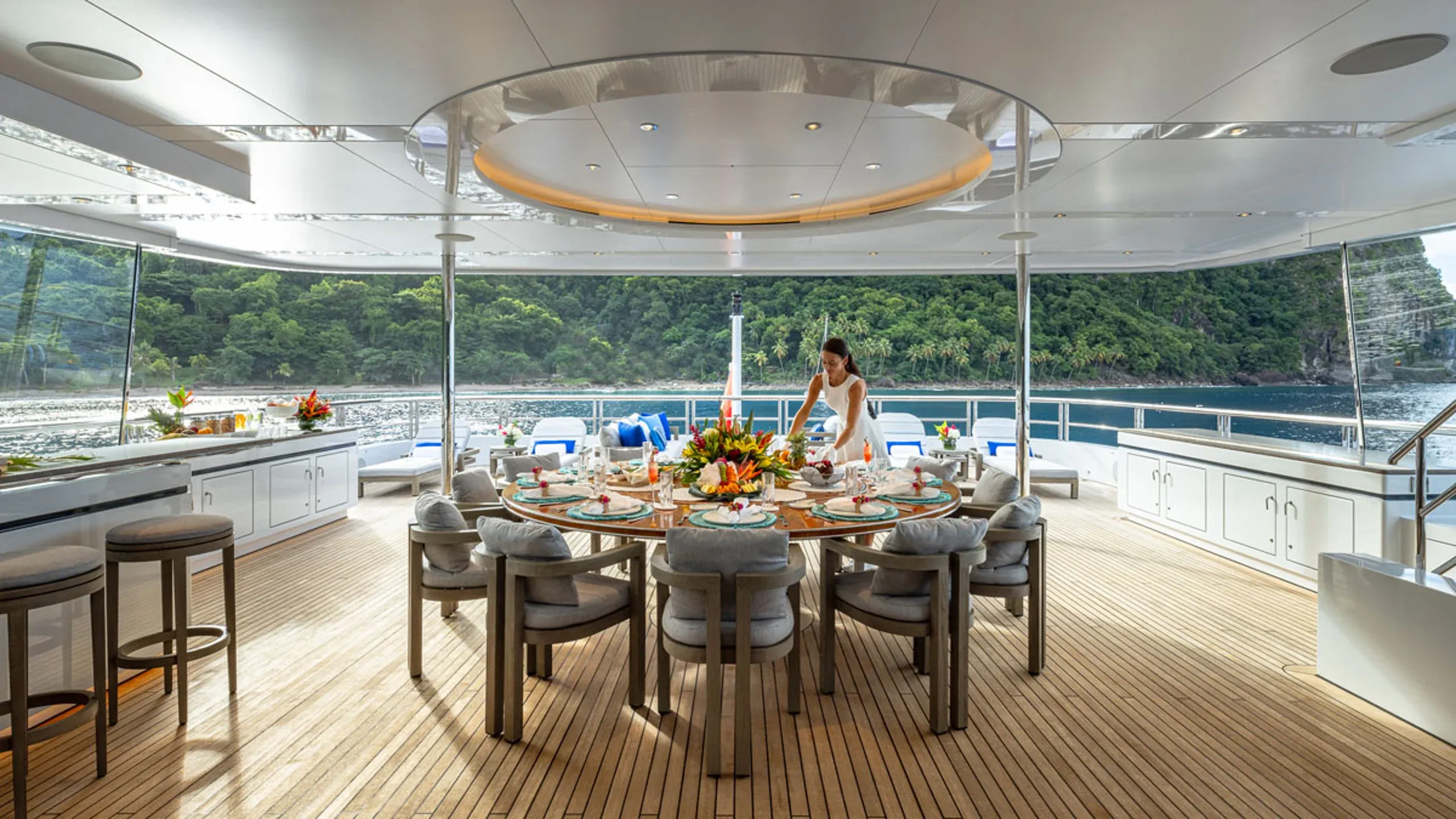
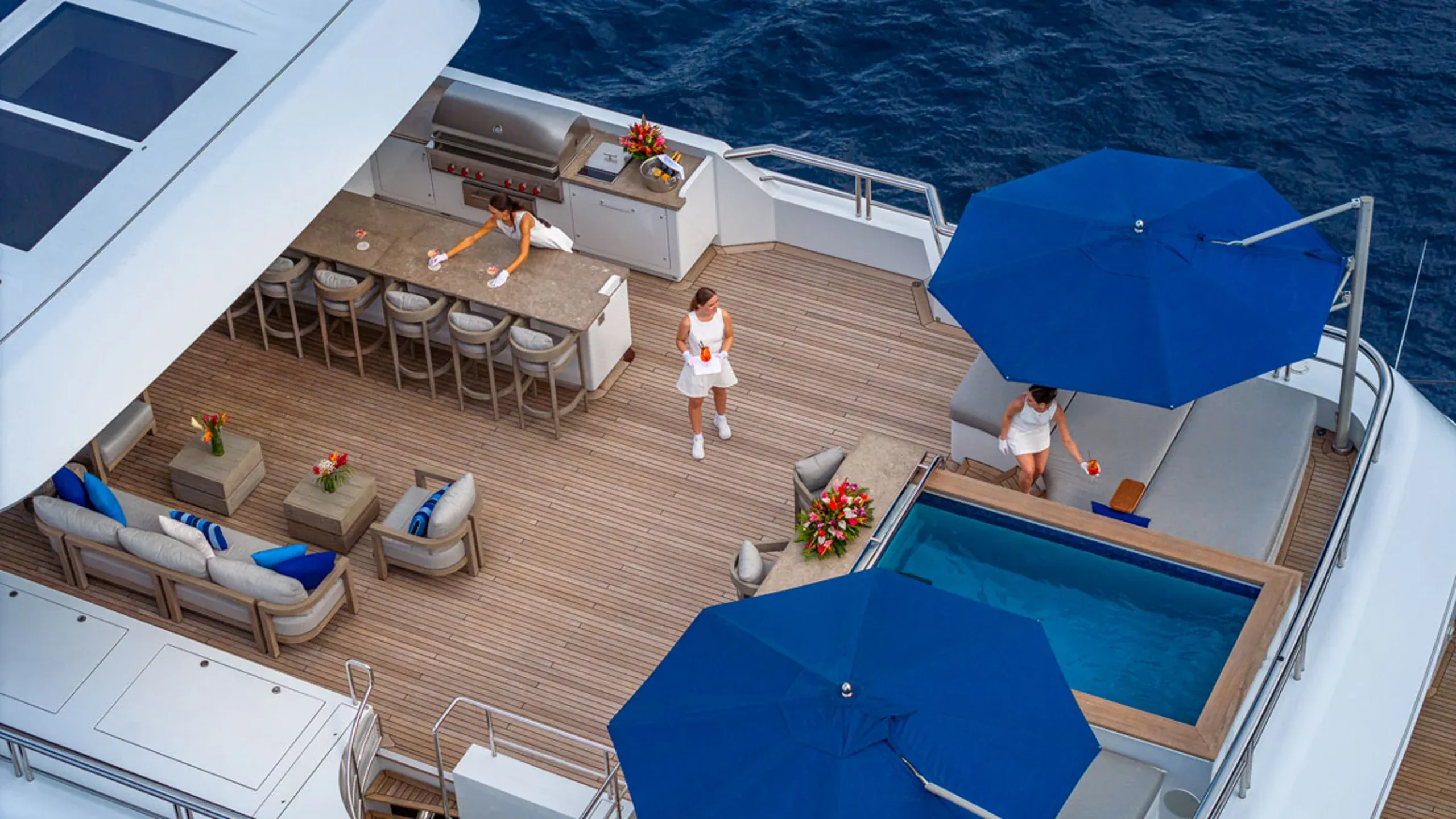
The hospitality side is run by the chief stewardess, who oversees the interior service, the cabin presentation, the dining service, and the housekeeping standard. Two or three stewardesses report into the chief stewardess; on larger yachts, a dedicated junior or trainee position handles laundry and provisioning support. The chef runs the galley independently, and most large yachts have a single chef with sous-support during charter weeks.
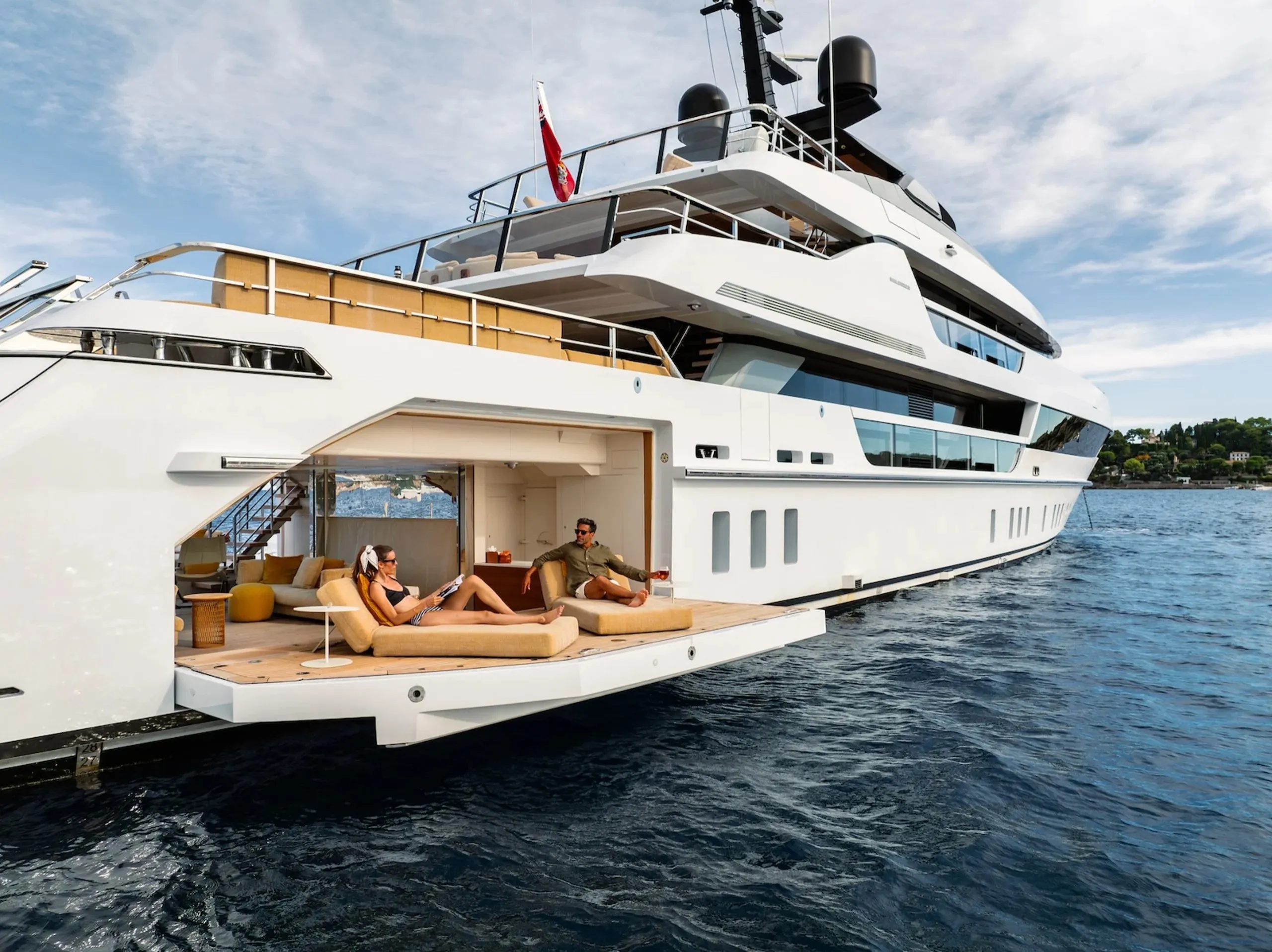
The deck team (typically two bosuns or deckhands plus a tender operator) handles the exterior operations: tender deployment, water sports, fenders, the day-to-day deck maintenance, and the support for the captain's deck rotation. The deck team is often the most visible to the charter party because they handle the embarkation, the tender runs, and the beach landings.
What the captain plans before embarkation
The captain's pre-charter planning runs across the two to three weeks before the charter starts. The work covers five areas in roughly the order they get attention.
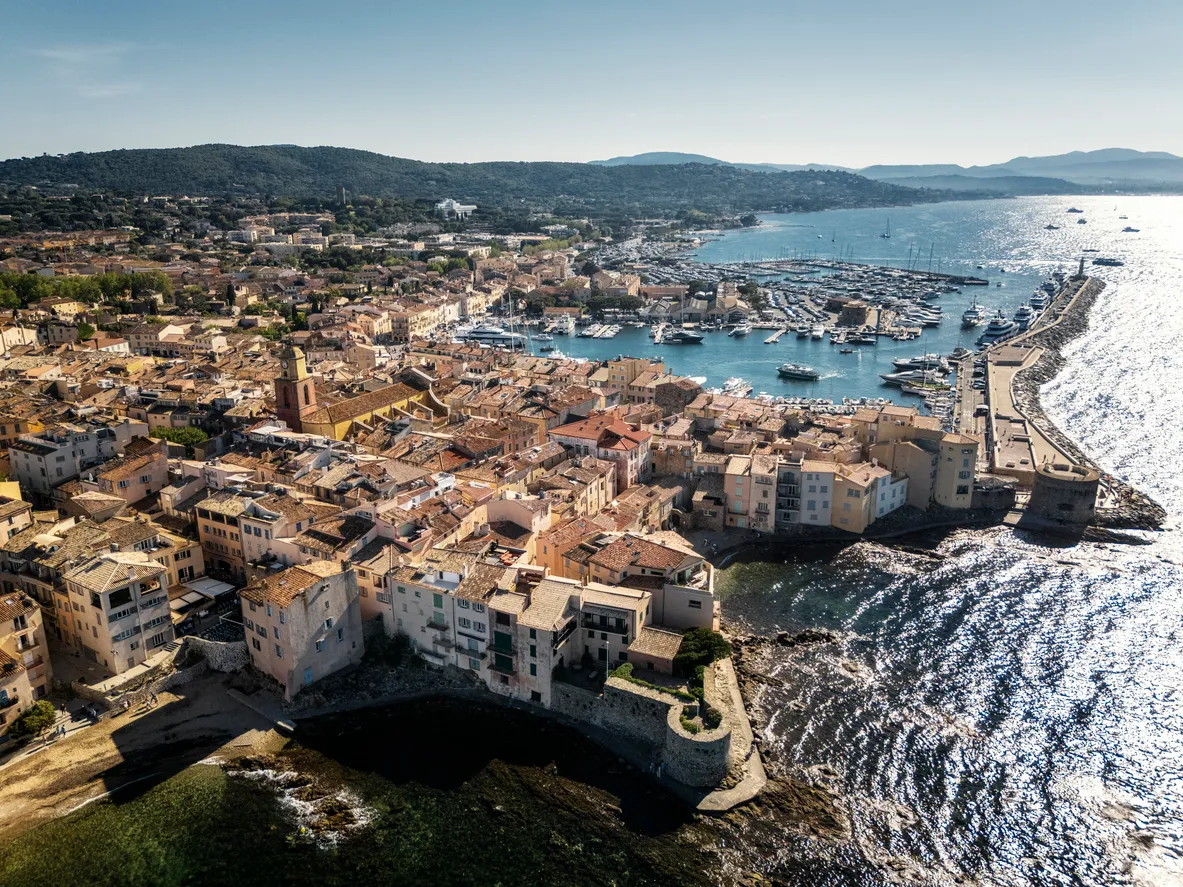
First, the cruising plan. The captain works from the charterer's brief through the broker to identify the destinations, the desired daily rhythm (cruising heavy, anchor heavy, port heavy), and the operational anchors of the week (a specific port-night, a particular event, a dinner reservation). The cruising plan is laid out in draft form, with flexibility built in for weather and for principal-side preference shifts on the day.
Second, the provisioning. The chef and the chief stewardess work together on the food-and-drink plan, with input from the broker on the principal's preferences. Provisioning runs typically forty-eight hours before embarkation and is sized to the week's specific itinerary; reprovisioning is arranged at one or two mid-week ports for fresh items.
Third, the reservation roster. Beach clubs, restaurants, helicopter charters, golf bookings, club introductions: anything that requires a confirmed slot is locked in before the charter starts. The lead time for marquee bookings is significant; a charter party that books Eden-Roc for a Wednesday lunch eight weeks ahead has a different probability of confirmation than one that places the same booking two days ahead.
Fourth, the operational compliance. Cruising-permits where required (Italian waters, French waters under certain charter classifications, the more controlled flag-state regimes), customs paperwork for cross-border movements, the port-by-port advance notification to harbour masters. None of this is glamorous, but it determines whether the planned routing can actually run.
Fifth, the contingency thinking. The captain holds two or three alternative routings, sized to the expected weather variability of the season. A west-Mediterranean charter in August holds a north-wind alternative and a mistral-active alternative; an Aegean charter holds a meltemi-week alternative and a calm-week alternative. The plan that runs on day one is the primary plan; the alternatives sit in the captain's working file.
The principal's role in the brief
The charter party's brief, communicated through the broker to the captain in the weeks before embarkation, is the most important input to the captain's planning. Most operational disappointments in a charter trace back to gaps in this preparation.
The brief should cover the cruising priorities (does the principal want long days at anchor, or long days under way?), the dining preferences (do guests prefer ashore at restaurants, or aboard for chef-led dinners?), the event anchors (specific reservations, events, days that must run), the household-style requests (children aboard, specific dietary requirements, allergies, religious-observance considerations), and any operational constraints (early-morning meetings, business calls requiring stable connectivity, specific water-sports requests).
The broker translates the principal's brief into a working document the captain can operationalise. The plan evolves through the planning window: many of the specifics emerge only in the final week as the principal's calendar firms up. The broker holds the channel between the principal's evolving routing and the captain's planning.
The daily rhythm aboard
A typical day on a charter operates within a settled rhythm. The yacht's day starts before the guests are awake: the deck crew prepares the exterior, the stewardesses set the breakfast service, the chef begins the day's provisioning. Guests typically rise between 09:00 and 10:00 for a leisurely breakfast on the aft deck.
The morning is usually anchor or short cruise. The captain holds the position for breakfast and morning swimming, or runs a short cruise to a different anchorage for the morning. Lunch is typically aboard or at a beach club; the tender deploys for the beach run if the day's routing includes a club lunch.
The afternoon is usually water sports, tender excursions, or a longer cruise toward the evening's port. The yacht arrives at the evening port between 17:00 and 18:00, the principal and guests transition for dinner (aboard or ashore), and the evening winds through the social calendar.
The crew works on a watch rotation overnight: the bridge is staffed during any cruising, the engineering watch covers the night, and the interior team is reduced to a minimum night-presence. The rhythm repeats with day two, modified by the day's plan and the evolving weather.
What goes wrong
Most charter problems are operational rather than relational. A failed reservation, a tender that needs unscheduled maintenance, a weather window that closes earlier than forecast, a port that becomes operationally inaccessible: these are the standard difficulties. The crew handles them with backup plans; the broker handles the principal-side communication.
The relational problems, such as interpersonal frictions between guests and crew, miscommunications about expectations, and specific service-level disappointments, are less common but more difficult to repair mid-week. The broker's role here is anticipatory: the brief that goes to the captain should pre-empt the most common friction points, and the captain's daily check-in with the principal should surface emerging issues early enough to address.
What the published charter literature does not capture is that the operational delivery of a charter is a sequence of careful pre-arrangements, not an improvised performance during the week. Brief the captain, through the broker, with the specificity that allows the plan to be made. The week follows from the plan.