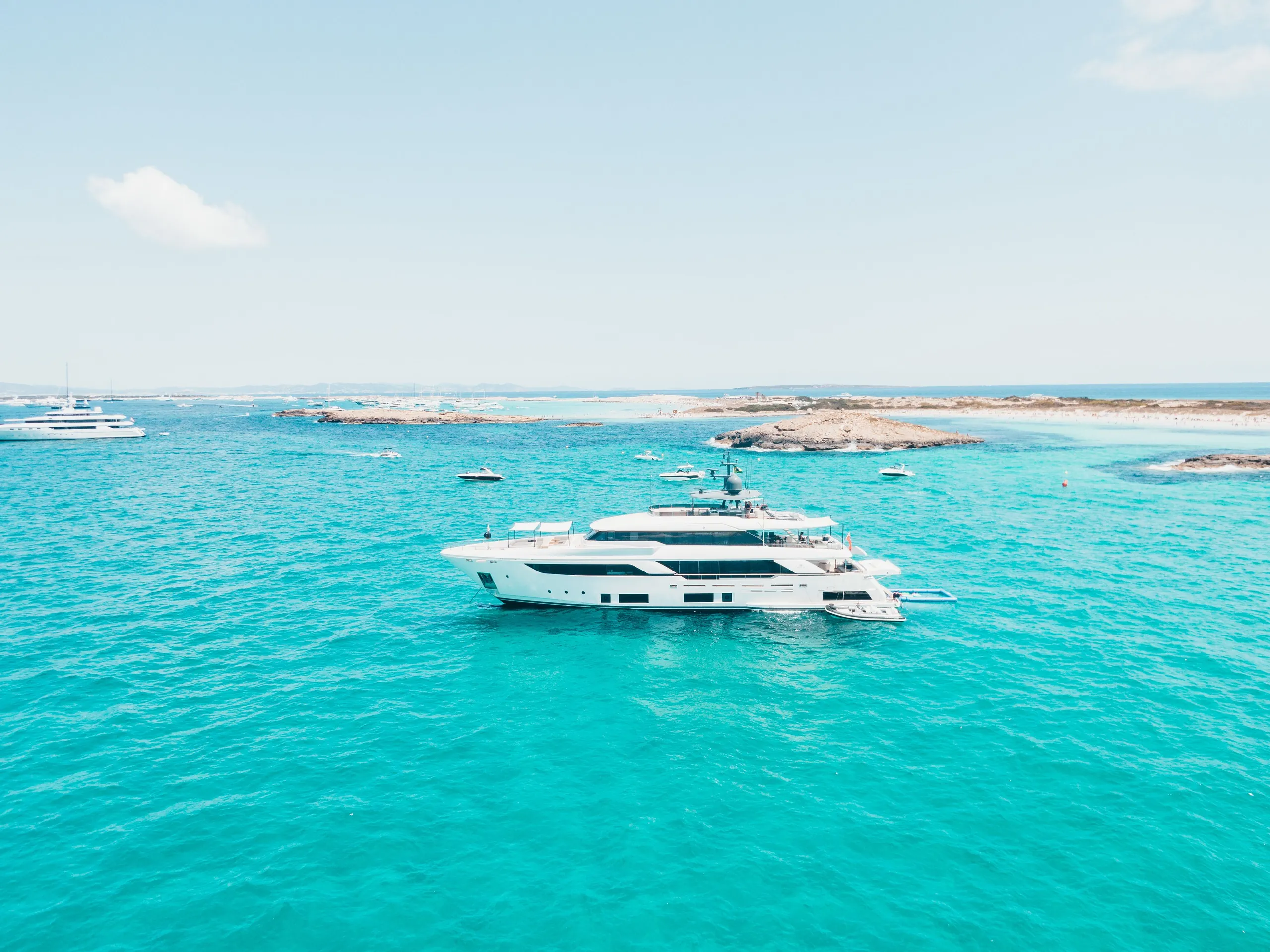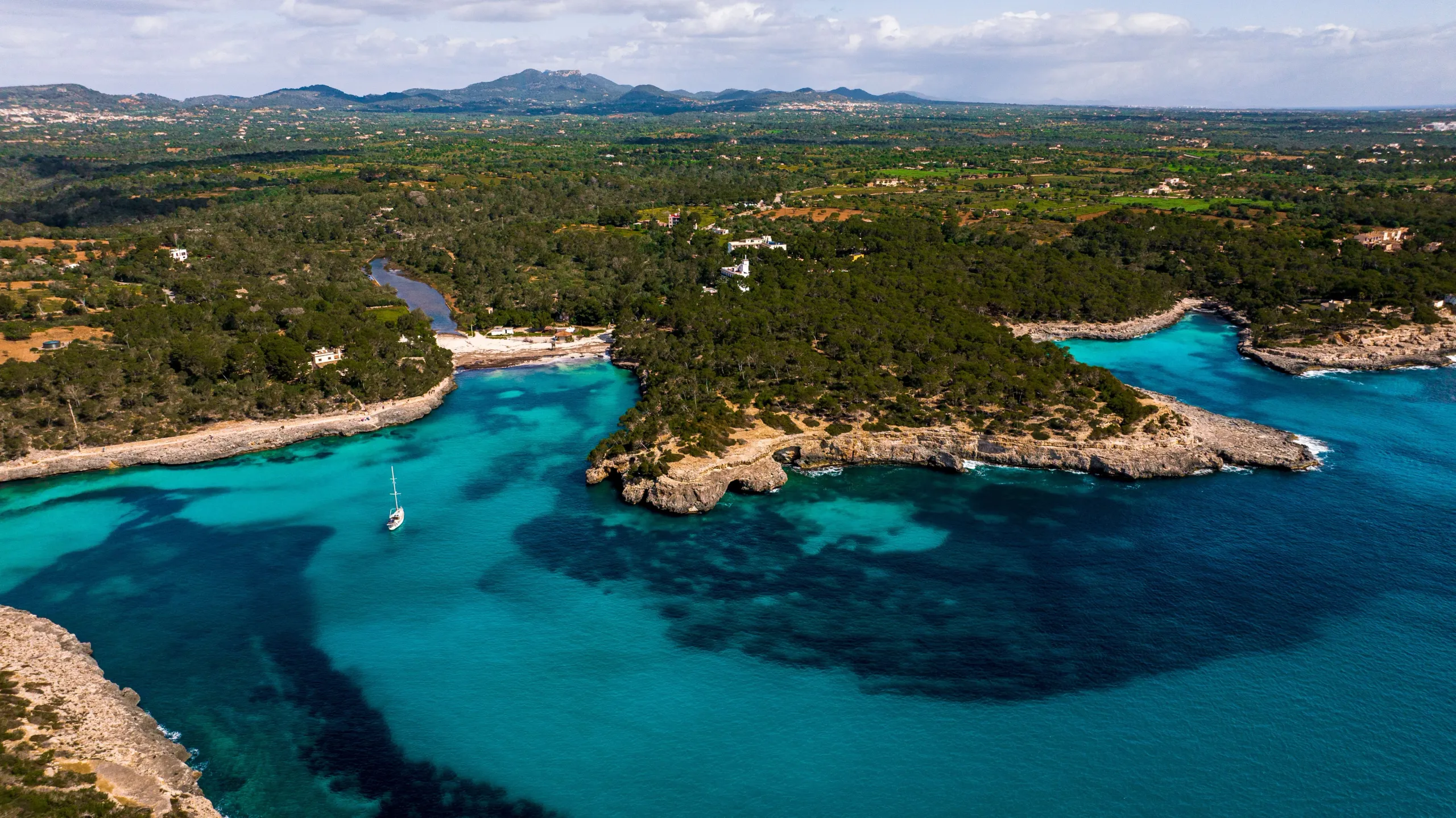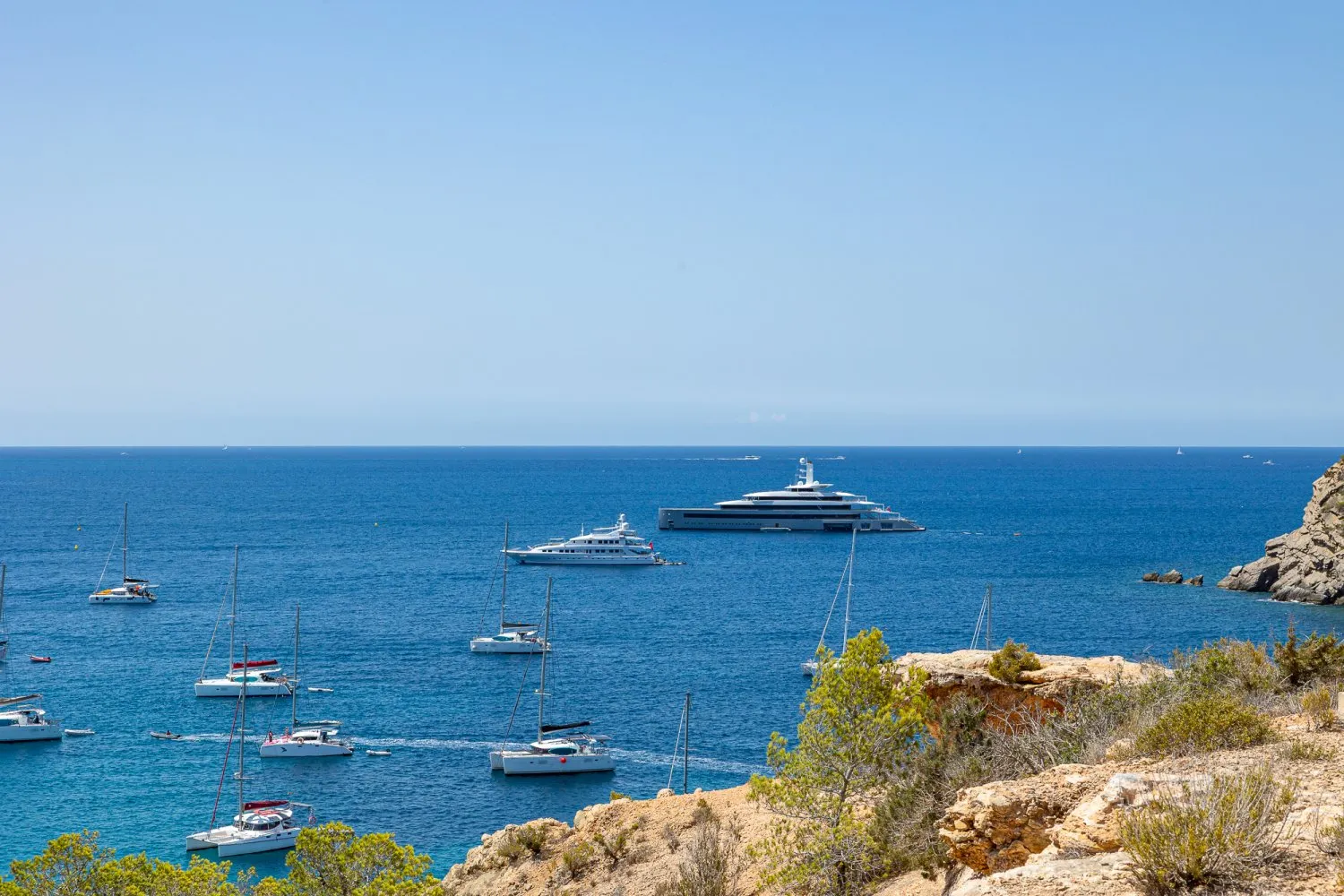
Formentera's water is the reason people charter the Balearics; reaching it well means anchoring where the seagrass rules allow.
That single sentence contains most of what makes this archipelago particular. People arrive expecting Ibiza, the nightlife, the headline marina names. What holds them, almost without exception, is the short crossing south to Formentera and the colour of the water over its sandbanks. The whole charter quietly reorganises itself around getting there at the right hour and lying in the right place once you do. And the right place is now a regulated question, not a matter of taste, because the seagrass meadows that produce that clarity are protected and the protection is enforced.
The waters and the season
The Balearics sit in the western Mediterranean off the Spanish mainland, far enough out that the water arrives clean and the light has a particular hard brightness to it. Ibiza and Formentera form the southern, smaller group, the Pityusic islands; Mallorca and Menorca lie to the northeast, an easy passage but a distinctly different feel. For charter purposes the season runs from late May into early October, with July and August the peak in both weather and crowding. June and September are the months an experienced advisor steers towards: warm enough to swim from the yacht all day, settled enough to plan around, and meaningfully quieter at the anchorages and beach clubs that define the place.
Wind is the variable that shapes a Balearic week. The afternoon thermal can build steadily through the day and the channel between Ibiza and Formentera, the Es Freus passage, funnels it. A good captain plans the prized western and southern anchorages for the morning and shifts to shelter as the breeze fills in. None of this is dramatic. It simply means the itinerary is read off the forecast each evening rather than fixed in advance, which is true of any serious Mediterranean charter and doubly so here.
Where you board and berth
Two embarkation points cover almost every charter. The first is Ibiza town, on the southeast of the island beneath the walls of Dalt Vila. It puts you within a short run of Formentera and the southern coves on day one, which is why most charters built around the Pityusic islands start here. Marina Ibiza and Marina Botafoch handle the larger yachts; berthing in high summer is tight and arranged well ahead, and a peak-August berth for a sizeable motor yacht is not something to leave to the week before. For a deeper feel of the island and its anchorages, the Ibiza page sets out the ground in more detail.
The second is Palma de Mallorca, the natural hub if your week leans north or if you are joining a yacht that is based there, as many in this part of the Mediterranean are. Palma is the most complete yachting port in the western Med: serious marinas, a deep refit and provisioning trade, direct flights, and a genuinely fine old city to start or finish in. From Palma the run down to Ibiza is comfortable, and many of the best Balearic itineraries treat Mallorca not as a side trip but as the larger half of the week, with Ibiza and Formentera as the brighter, busier south.
Whichever you choose, embarkation is worth getting right because it sets the rhythm. Boarding in Ibiza town in the late afternoon, with the crossing to Formentera saved for the first clear morning, is a stronger opening than arriving anywhere at midday into the heat and the traffic.
What a charter here actually looks like
The signature day is a morning at Formentera. From Ibiza it is a short hop south across Es Freus to the long sandbanks off the north of the island. Illetes is the name everyone knows: a thin spit of pale sand with water the colour of a swimming pool, shallow and luminous, lying off it in settled weather is the image people carry home. A little further east, the islet of Espalmador and its lagoon offer the same astonishing clarity with slightly more shelter and, in the right conditions, a quieter scene. The trick is to be there early. By late morning in August the bank fills with day boats out of Ibiza, and the difference between arriving at nine and arriving at noon is the difference between two charters. The Formentera page goes into the anchorages individually.
Ibiza itself is read by coast and by hour. The west is the sunset side and the more theatrical. Cala Comte, with its low rocky islets offshore and shallow turquoise water, is among the finest anchorages on the island and one of the classic places to lie through the late afternoon and watch the light go. A little to the north, Cala Salada is smaller, greener, backed by pine, and rewards an early or a late visit rather than a midday one. These western coves are where the day softens: a long swim, lunch aboard at anchor, the tender ashore if there is a beach club worth the trip, and the sun dropping into the sea ahead of you rather than behind the land.
Evening is a separate decision. Some principals want the town: dinner ashore in Ibiza or a tender in to one of the names on the water. Others want exactly the opposite, the yacht at anchor in a quiet cove with the island's noise safely over the hill. The strength of a charter here, against doing the same things from a villa, is that you can have both across a week and never queue for either. As the teaser to this guide puts it, the sea is the way to step out of the crowds rather than into them, and the itinerary should be built on that principle.
Who it suits and how it differs from the coast
The Balearics suit a charter that values water and swimming over a packed run of ports. Compared with the French Riviera, where the pull is the towns, the restaurants and the procession from Cannes to Monaco, the Pityusic islands are about the sea itself and a small number of exceptional anchorages. Compared with Sardinia's Costa Smeralda, the water is a close rival but the social register is different: Ibiza is younger, louder where it is loud, and quieter where it is quiet. Families and groups who want long days in clear water with the option of a serious night out are very well served. Those whose idea of a charter is a new harbour every evening are better pointed at the Côte d'Azur or the Amalfi coast. For how the Balearics sit within the wider region, the Mediterranean charter guide gives the comparative picture.
The other genuine difference is space. Even in peak season the archipelago has anchorages with room to lie, which is not always true of the busiest stretches of the Riviera. The constraint here is not where you can fit but where you are permitted to drop, and that brings us to the rule that governs everything.
Practical notes
Posidonia and where you can anchor. The clear water is produced by meadows of Posidonia oceanica, a slow-growing seagrass that is protected across the Balearics. Anchoring on it is restricted and the restrictions are actively patrolled, with fines for dropping on the protected seabed. In practice this means lying over sand, using the marked or app-guided anchoring zones, and increasingly relying on the eco-mooring buoy fields installed at the most sensitive spots, particularly off Formentera. A captain who knows these waters reads the bottom and chooses the spot accordingly; it is a real planning input, not a formality, and it is the single most important operational fact about a Balearic charter. Where rules and buoy availability change season to season, we note the current position when we set the itinerary.
Tender logistics. Much of what you want to reach is a tender run from the anchorage: a beach club ashore at Formentera, dinner in Ibiza town, a swim into a cove too shallow to enter. A capable tender and a crew comfortable running it in an afternoon breeze matter more here than on a port-to-port coast. Beach club access by tender should be arranged ahead at the well-known spots in season.
Access and timing. Ibiza and Palma both have airports with strong summer connections into the main European hubs, and a private flight into either is straightforward. The pinch points are berths in peak weeks and the better restaurant and beach-club tables, both of which reward booking early. Provisioning is excellent out of Palma and good out of Ibiza.
The shape of the week. A common and well-balanced pattern is to start in Ibiza town, take the first clear morning for Formentera, work the western coves through the back half of the week, and either return to Ibiza or carry north to Mallorca to finish. The specifics flex with the forecast, but that arc captures the best of the archipelago. Building the right yacht and crew around it is what our yacht charter advisors handle directly.
The one thing to fix in your mind before anything else: plan the charter around being at Formentera early and lying where the seagrass rules allow, and the rest of the week falls into place behind it.