Private yacht charter in Formentera
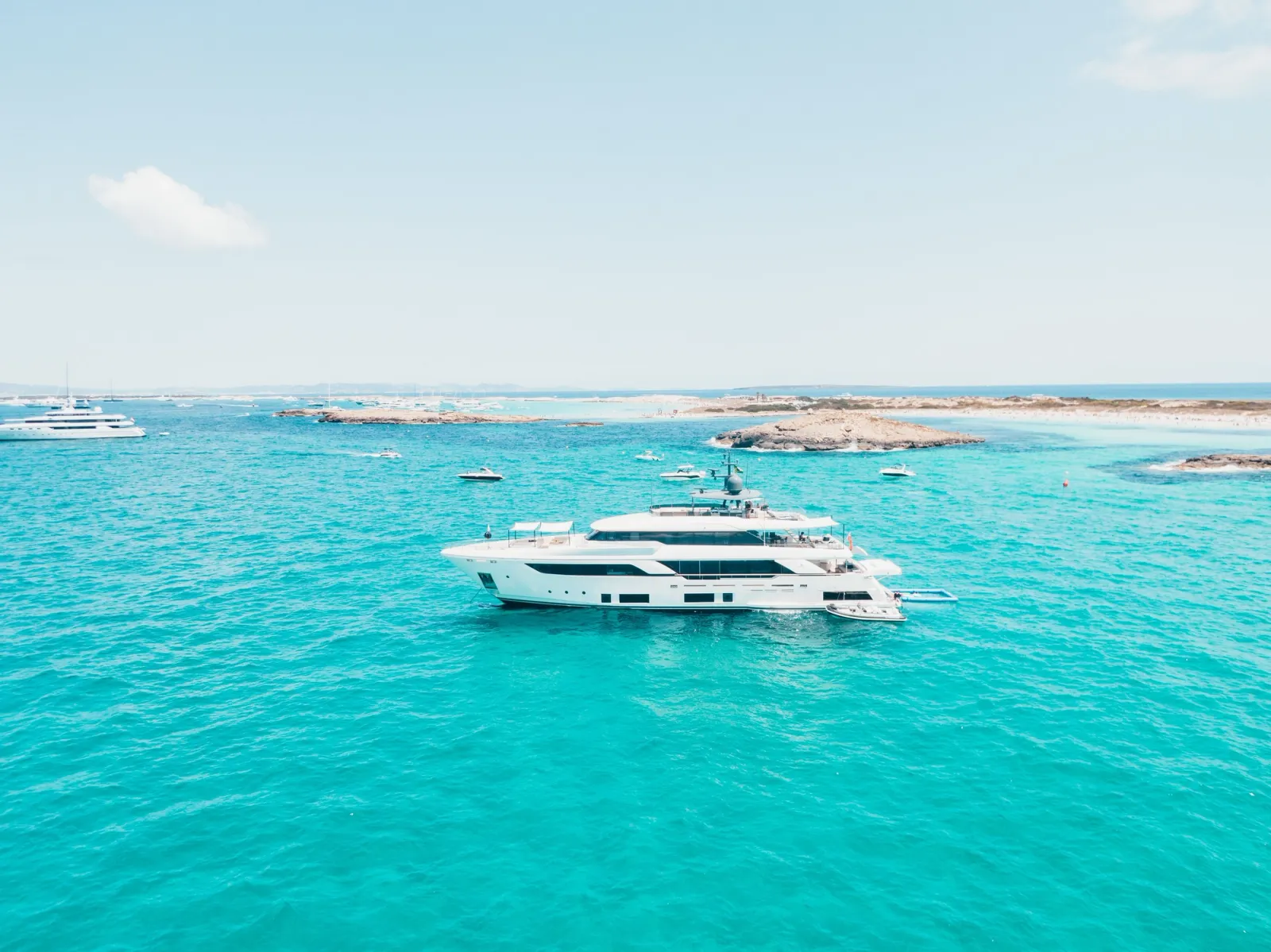
Formentera is the smallest and most southerly of the Pityusic islands, 19 kilometres long and six kilometres south of Ibiza. It has no airport, and its port, La Savina, is the only way in for passengers and goods. A Formentera yacht charter is about the water: the sandbanks off the north of the island, the islet of Espalmador and the clear shallows of Es Freus.
The seagrass beneath that water is protected by law and decides where a yacht may anchor, and the island is best seen early, before the day boats from Ibiza arrive.
Formentera from the water
Ses Illetes. The narrow spit of sand at the northern tip, with shallow water on either side: the island's best-known anchorage, and the busiest in summer.
Espalmador. A privately owned islet just north of Formentera, separated from it by a shallow sandbar that can be waded in calm weather, and part of the Ses Salines natural park. Its small mud lagoon is off limits, with fines for those who use it.
Es Freus. The strait between Ibiza and Formentera, with its scattering of islets, lies within the same natural park, and its seabed holds Posidonia meadows that are among the best conserved in the Mediterranean.
Cala Saona. The main cove of the west coast, a sand beach facing the sunset and a good afternoon anchorage in settled weather.
La Savina. The port on the north coast, with marina berths for yachts and the ferries from Ibiza. It is the smallest port run by the Balearic port authority, and over a million passengers pass through it each year.
Cap de Barbaria and La Mola. Two lighthouses mark the island's ends: Cap de Barbaria at the southern tip and the Far de la Mola on the La Mola peninsula to the east, both reached by road from the port.
Posidonia and the anchoring rules
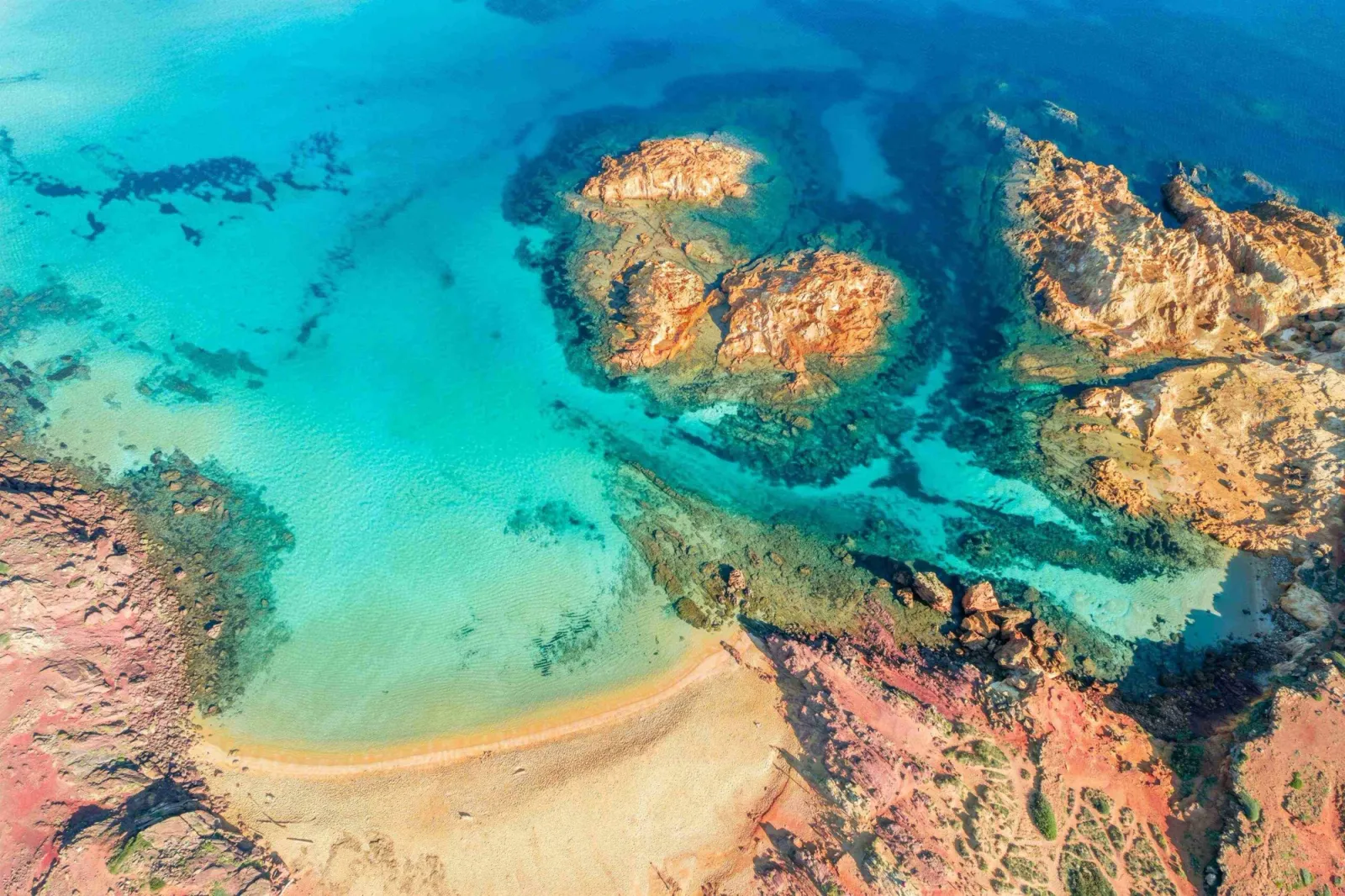
The seabed around Formentera holds meadows of Posidonia oceanica, a protected seagrass. They are part of the UNESCO World Heritage site Ibiza, Biodiversity and Culture, inscribed in 1999, and the waters of Es Freus lie within the Ses Salines natural park, created in 2001 with some 13,000 hectares of sea.
Balearic rules prohibit anchoring on the meadows. Yachts drop anchor on sand, which the regional government maps in its Posidonia app, or take a mooring buoy where a seasonal field is laid. A bill before the Balearic Parliament in autumn 2026 would also limit vessels over 12 metres to 10 knots within one nautical mile of the coast. We check the rules in force when the itinerary is set.
When to go
The season runs from May to September. June and September are the months for space at the anchorages; in July and August, day boats from Ibiza fill the sandbanks of Ses Illetes by late morning, so the early hours count. The anchorages face different winds, and the captain chooses each day's side of the island by the forecast. Ibiza's club season, from the end of April to mid-October, is a short crossing away.
Marinas and arrival
Formentera has no airport. Guests fly into Ibiza, whose airport lies about 7 kilometres from Ibiza Town, and either join the yacht in Ibiza's marinas, as most Formentera charters do, or take the ferry to La Savina, a crossing of about 30 minutes. La Savina has marina berths for yachts, but it is a small port.
Yachts and what a week costs
Formentera rewards a shallow draught. Catamarans can lie in shallower sand closer to the beaches, while deeper-draught yachts anchor further out and use the tender.
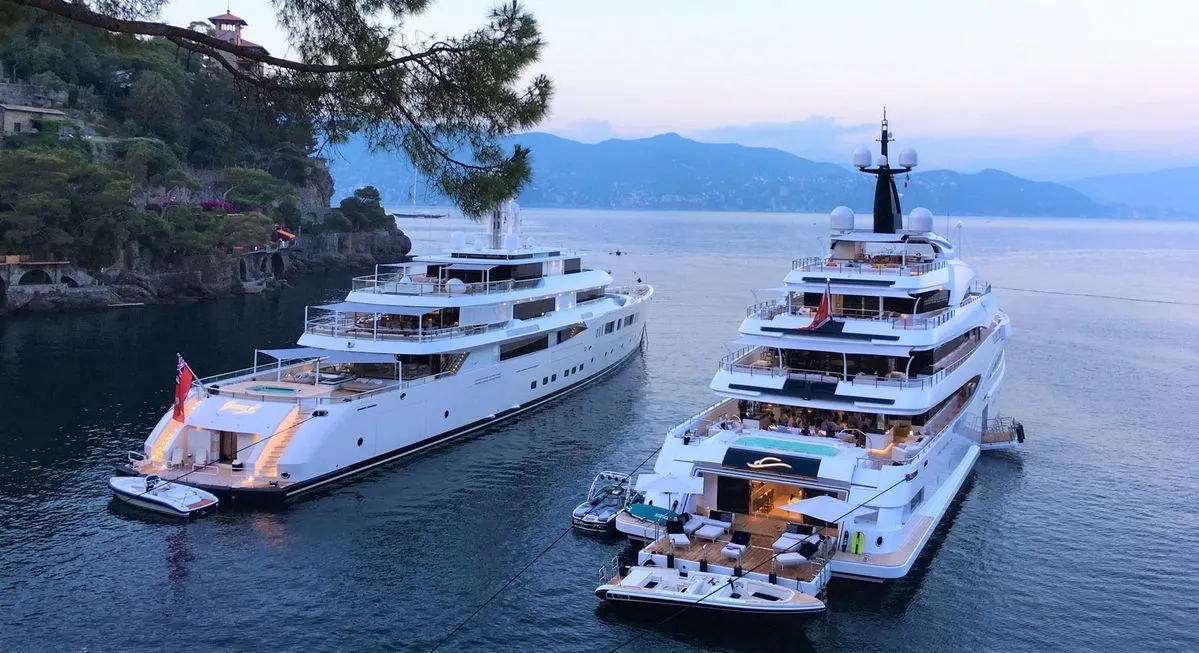
Weekly rates follow the Mediterranean pattern. Before running costs, a 20 to 30 metre motor yacht runs from around EUR 30,000 to EUR 80,000, a 30 to 45 metre yacht from around EUR 80,000 to EUR 250,000, and yachts above 50 metres from around EUR 250,000, quoted individually; sailing yachts usually sit below motor yachts of the same length. The APA, typically 25 to 35 percent of the base rate, VAT at a rate set by the country and cruising area, and a customary gratuity of 5 to 15 percent bring the all-in cost to roughly 130 to 150 percent of the base rate. Our guide to charter costs explains each line.
How a Formentera charter is arranged
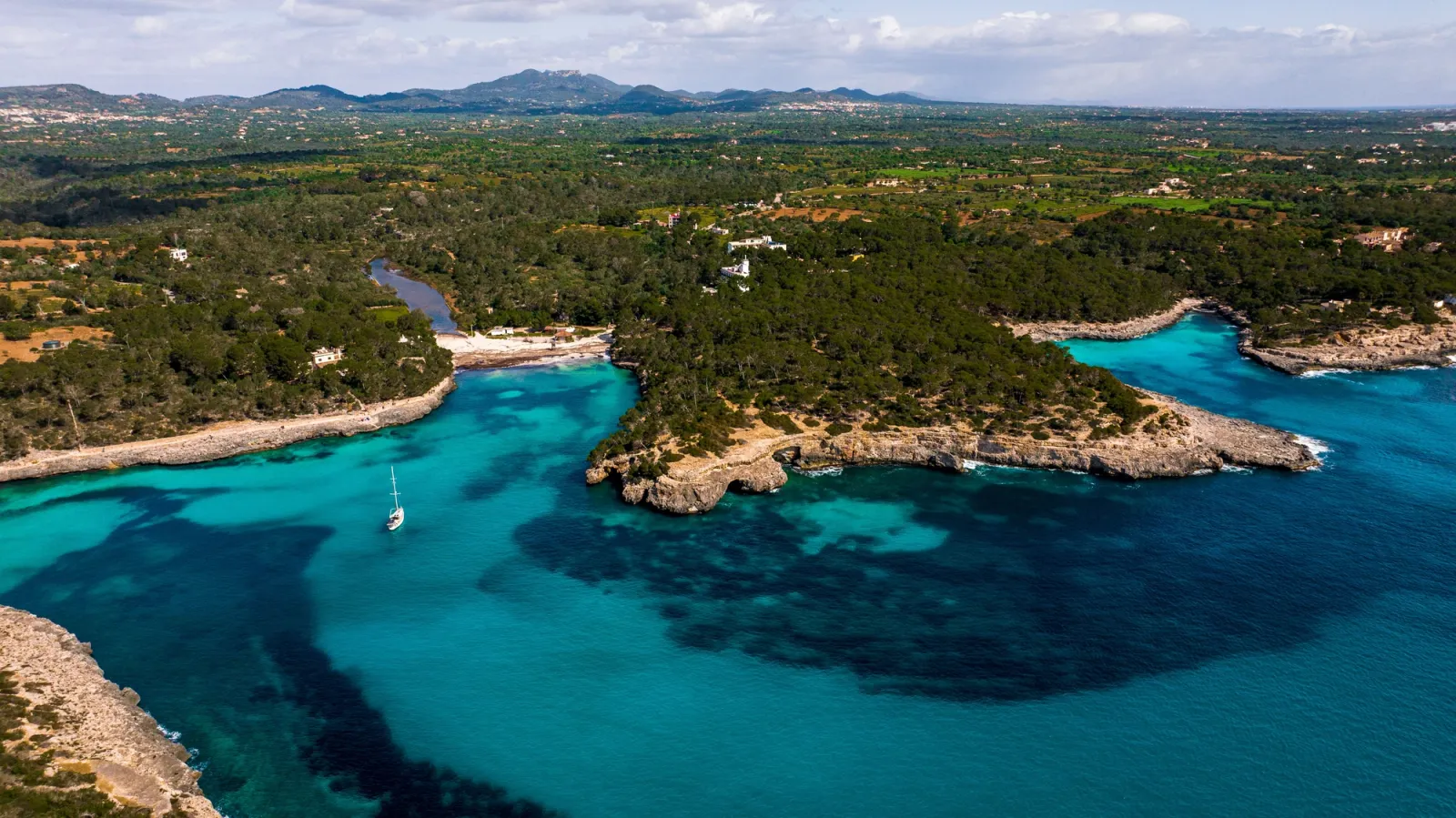
Most Formentera charters begin in Ibiza and spend part of the week around Formentera; longer Balearic routes continue to Mallorca and Menorca. We shortlist the yachts that suit your group and plan the anchorages around the Posidonia rules and the forecast. Our Ibiza and Balearics guide explains the timing of the sandbanks, and the Balearic Islands page covers the archipelago.
Tell us your dates, the size of your group and what you have in mind, and we will come back with a shortlist. Start the conversation.