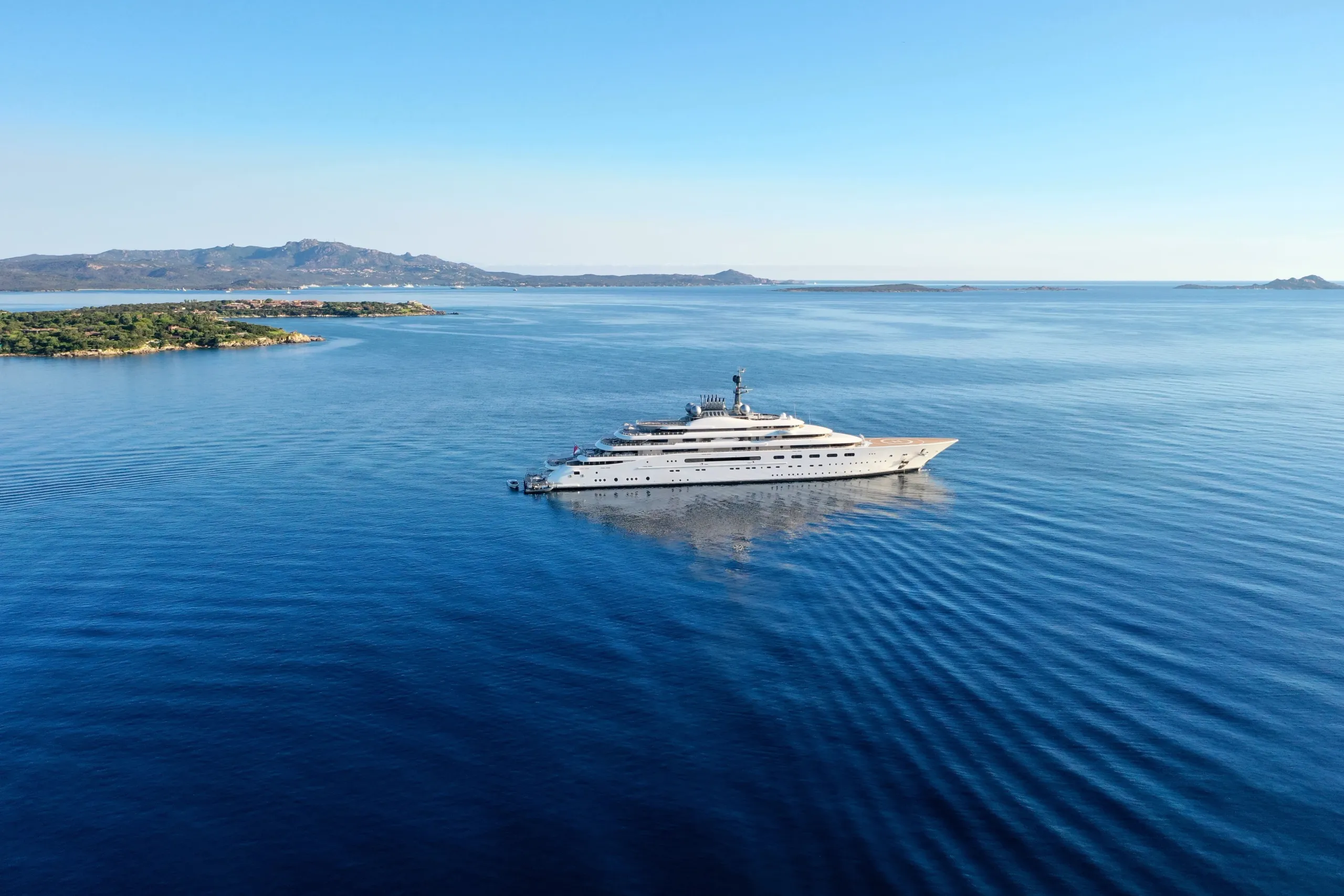
Capri belongs to the day-trippers from ten until four; a yacht lets you have it at dawn and again at dusk.
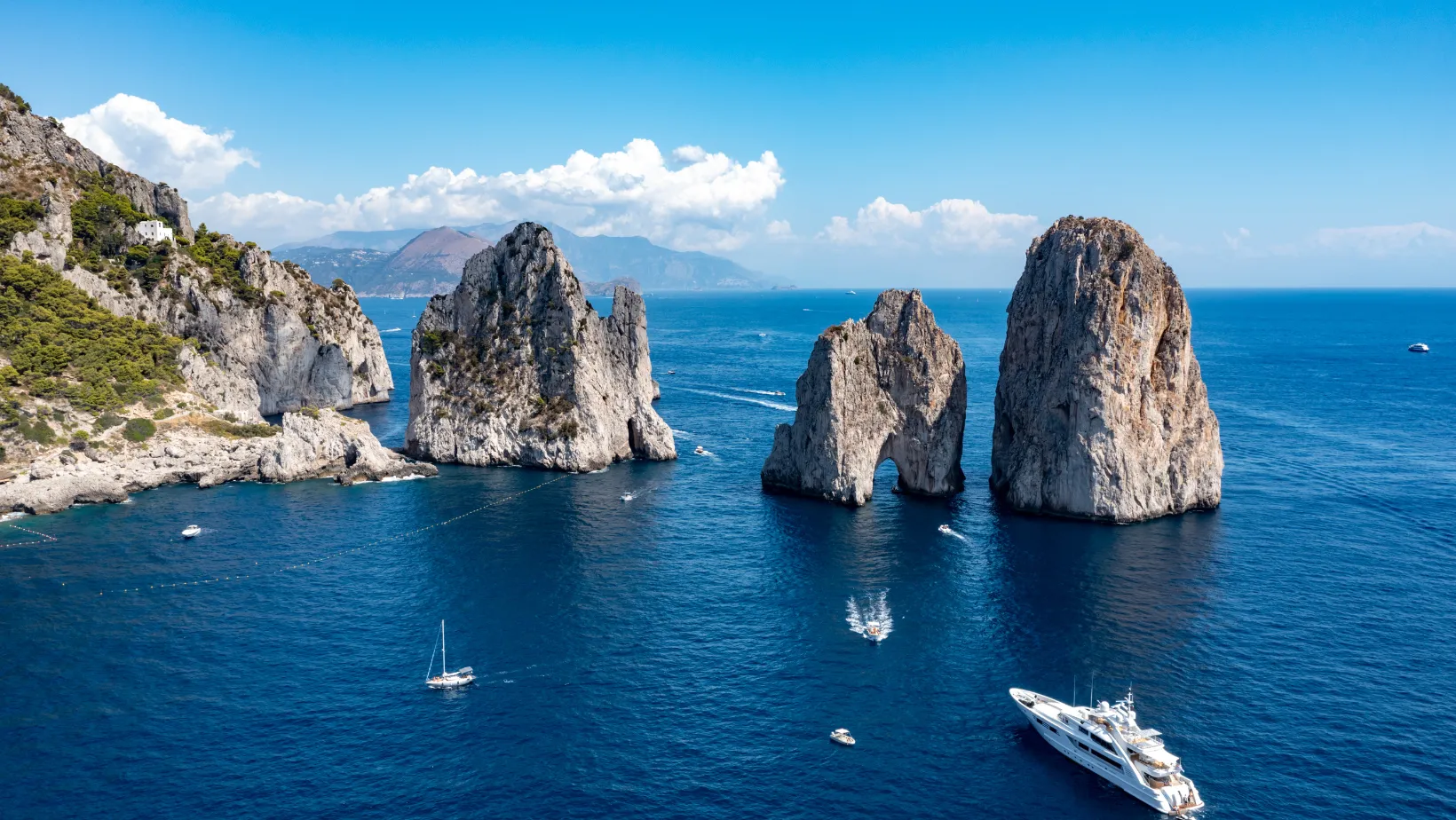
That single shift in timing is the whole argument for taking this coast by sea. From mid-morning the hydrofoils arrive from Naples and Sorrento in waves, the funicular up from Marina Grande runs at capacity, and the Piazzetta fills with people who must catch a boat back by late afternoon. A yacht inverts the rhythm. You can be anchored off the Faraglioni at seven in the morning with the rock stacks lit from the east and almost no other tender in the water, then ashore again after six when the island exhales and the restaurants in Capri town and Anacapri turn back into a place people actually live. The middle of the day, when the towns are at their loudest, is precisely when you want to be at anchor somewhere else along the coast or out swimming. The boat is not a luxury overlay on the Amalfi experience; on this particular stretch of water it is the only sensible way to move.
The waters and the season
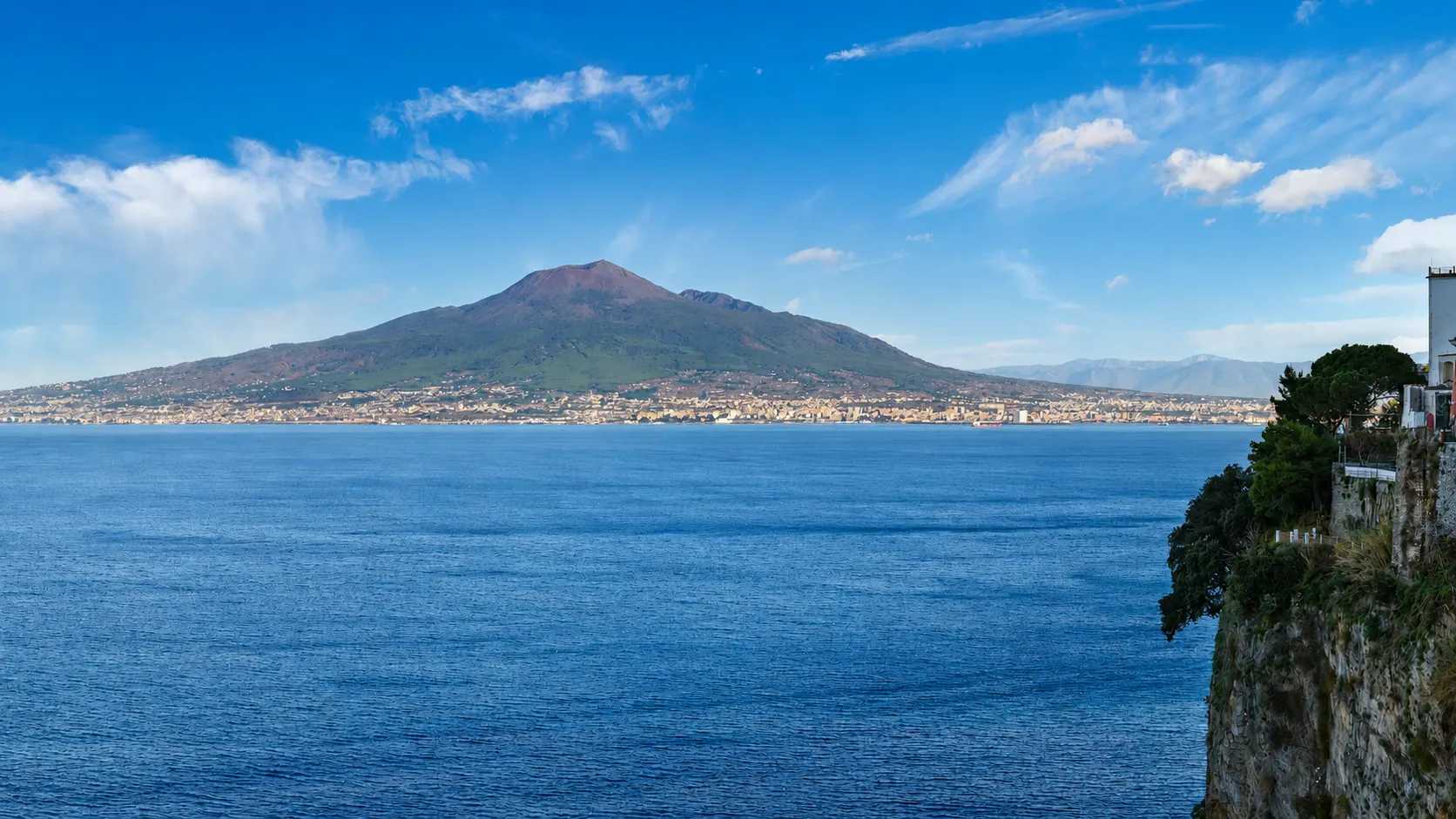
The Amalfi Coast runs along the southern edge of the Sorrentine Peninsula, with Capri lying off its western tip across a short stretch of open water. It is a small cruising ground by Mediterranean standards. Positano to Amalfi town is a short hop, and Capri sits perhaps an hour or so under power from the coast depending on conditions. That compactness is the appeal: a week here is not about covering distance, it is about repeating a handful of exceptional anchorages at the right hours.
The settled season is broadly May to early October. June and September are the advisor's preference. July and August bring the warmest water and the most reliable weather, but also the peak of the day-boat traffic and the highest pressure on every berth and beach club. The coast is exposed to the south and west, and an afternoon sea breeze is normal; mornings are typically the calmer, glassier window, which dovetails neatly with the early Capri strategy above. Spring shoulder weeks can be beautiful and quiet, but the water is cooler and not every beach club will be open. We note these exceptions where they matter; the broad pattern holds.
For the wider rhythm of a Mediterranean itinerary and how this coast fits a longer summer programme, the Mediterranean charter guide sets the regional context.
Where you board and berth
Embarkation is the first practical decision, and it shapes the rest of the week. There are three sensible options.
- Naples is the usual choice for larger yachts and for guests flying in, with good airport access and the deep-water capacity to take sizeable vessels. It also lets you fold a little of the bay into the itinerary; the Naples page covers the city as a starting point. The trade-off is a longer first leg down to the coast proper.
- Salerno, at the eastern end, is the quieter, less obvious embarkation and brings you onto the coast from the Amalfi side rather than the Capri side. It suits guests who would rather start with the towns and save Capri for later in the week.
- Capri itself can work as a meeting point if guests are already on the island, though Marina Grande is busy and space is tight.
The honest truth about berthing here is that this is an anchorage cruising ground, not a marina-hopping one. There is no large modern marina at Positano or Amalfi in the way there is at, say, Porto Cervo. The small harbours, Marina Grande and Marina Piccola on Capri, and the modest port arrangements at Positano and Amalfi, get congested fast in season and prioritise the local day-boat and ferry traffic. A capable yacht spends its nights at anchor in a chosen bay and uses the harbours only as tender landing points. Securing any alongside or stern-to space for a larger vessel in high summer needs to be arranged well ahead, and even then it is not guaranteed.
What a charter here actually looks like
The shape of a good day is set by the anchorages and by the clock. In the morning you take Capri while it is empty, as described, or you swim somewhere the day-boats have not yet reached. By late morning, as the island fills, you move.
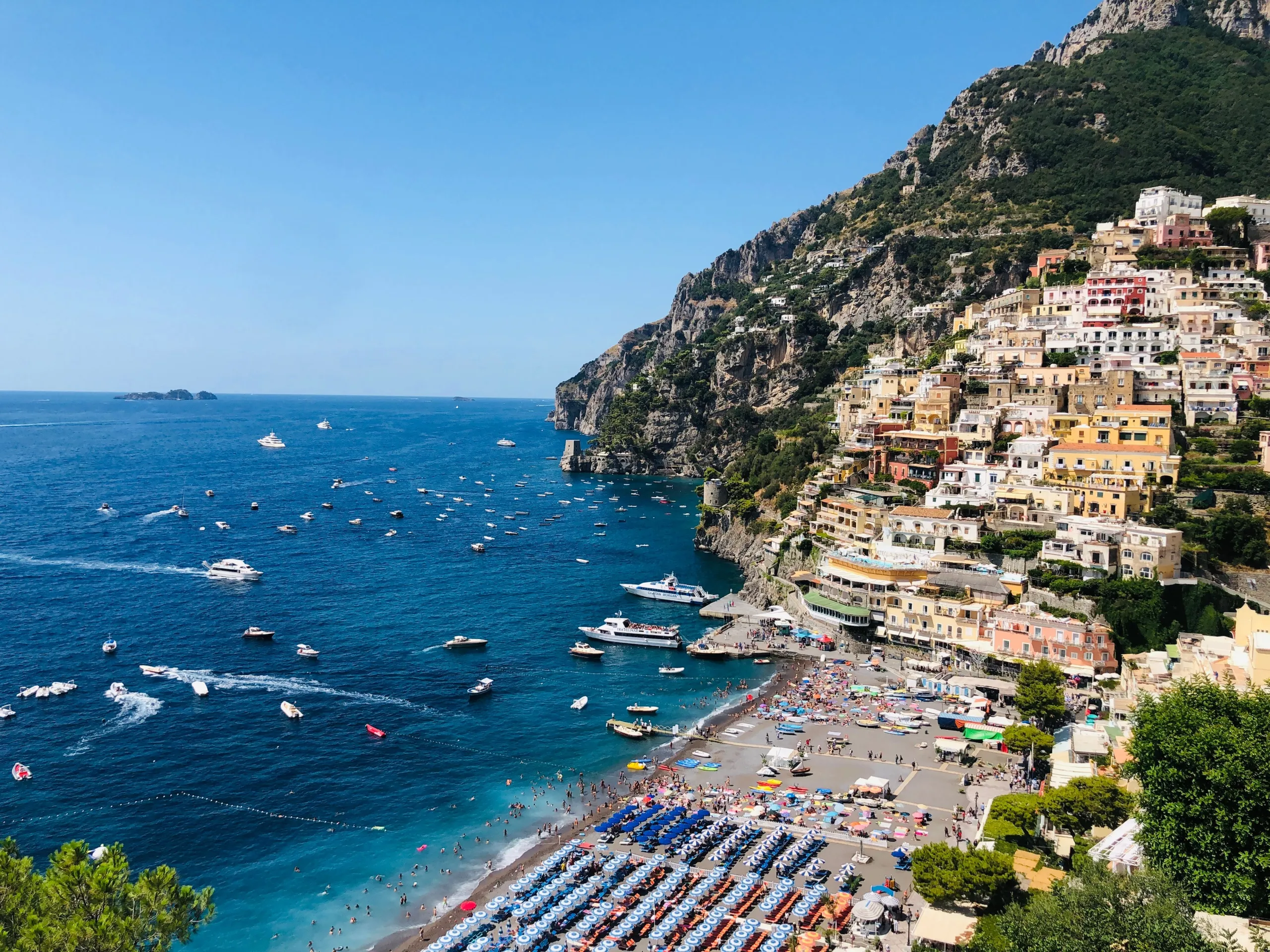
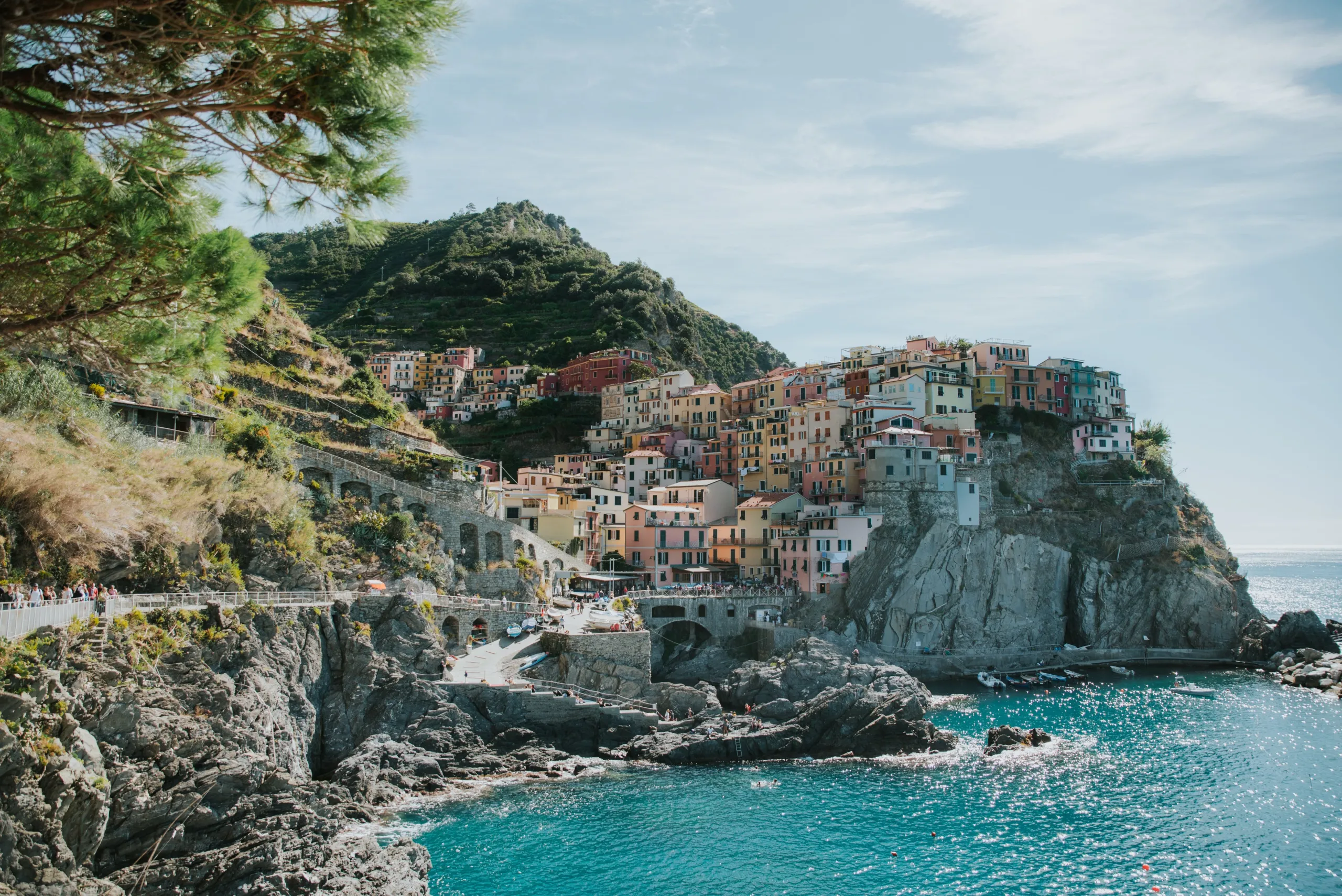
Positano is the photograph everyone knows, the pastel houses stacked up the cliff, and it is genuinely lovely seen from the water at the right hour. It is also small and intensely busy; the anchorage off the town can become crowded, and going ashore by tender is the only graceful way in, since arriving by road means the switchbacks and the parking that does not exist. Amalfi town and Ravello above it reward a visit, Ravello especially for its gardens and the long view down the coast.
The quieter pleasure of this coast is the bay below Nerano, on the Sorrentine side, with the village of Marina del Cantone and the run of restaurants along the shore. This is where the cooking turns serious. The spaghetti alla Nerano, the courgette dish the bay is known for, is reason enough to anchor here for lunch, and the bay below Da Conca and that stretch is a calmer, less photographed alternative to the Positano crush. Many a week here settles into a pattern of Capri at the edges of the day, the coast towns by tender for an afternoon or an evening, and the Nerano side for a long, unhurried lunch at anchor.
Capri itself rewards attention to two specific windows. The Faraglioni, the three rock stacks off the south-eastern point, are at their best in early morning and late light, and a tender can run close. The Blue Grotto is the more demanding piece of timing. The grotto is accessed by small rowing boats that enter through a low opening, the light inside is the whole point, and it is workable only when the sea is calm enough for the entrance and only during the hours the boatmen operate. Mid-morning calm is often the realistic window; an afternoon swell can close it entirely. Treat it as a flexible item, not a fixed appointment, and have the captain read the sea before you commit the morning to it. For the island in detail, see the Capri page.
Who it suits and how it differs from the nearby coast
This is not the Costa Smeralda and it is not the Riviera. There are no marina forecourts of superyachts on display, no equivalent of the Porto Cervo or Saint-Tropez scene where the harbour is itself the event. The Amalfi Coast is steeper, older, more vertical, and the pleasure is the landscape and the food rather than the berth-side spectacle. It suits guests who want the towns and the cooking and the dawn swim more than they want to be seen alongside.
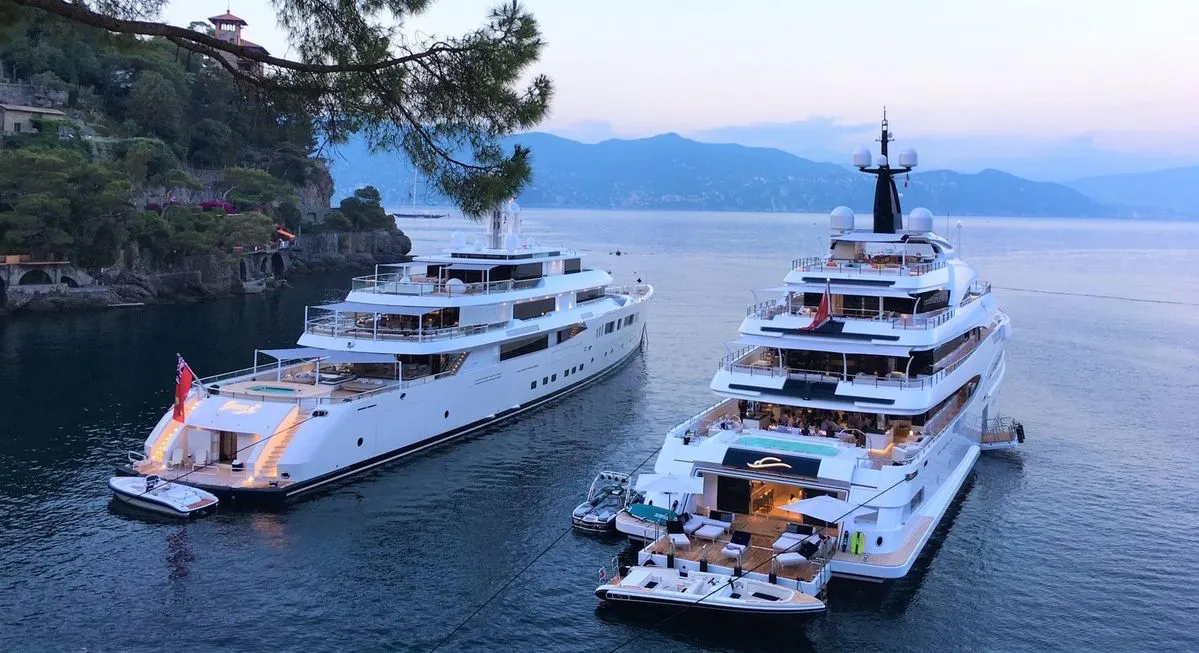
It also suits a slightly more modest tender-led programme. Because so much of the coast is anchorage and tender work, a yacht with a capable, comfortable tender and a crew who know these waters is worth more here than sheer length. A large vessel can absolutely cruise this coast, but it will spend most of its time at anchor and send guests in by tender regardless, so the gain over a well-found smaller yacht is less than it would be in a marina-rich cruising ground.
Compared with the islands further out, Capri and the coast are busier by day and quieter by yacht-count at night. The contrast that defines the week is not between glamour and calm; it is between the daytime island and the evening one, and the boat is the instrument that lets you live on the evening side of it.
Practical notes
A few things worth knowing before the week:
- Tender logistics are everything. Town landings at Positano, Amalfi and Capri are congested in season and shared with ferries and day-boats. Build in time, and let the crew handle the timing of pick-ups rather than fixing them to the minute.
- The harbours are not parking. Marina Grande and Marina Piccola fill early and serve local traffic first. Plan to anchor and tender ashore as the default, not the exception.
- Restaurants book out. The known tables at Nerano and the better places on Capri want reserving ahead in high summer; a good crew will arrange this.
- Weather reads the day. South and west exposure means an afternoon breeze is normal. Front-load the calm-water items, Capri at dawn and the Blue Grotto, into the morning.
- Access in and out. Naples gives the easiest air access for guests; Salerno is quieter; Capri works only if guests are already there.
If you take one operating principle from all of this, make it the timing one. Hold your Capri visits to the early and late hours, treat the Blue Grotto as weather-dependent rather than scheduled, and spend the busy middle of the day at anchor on the Nerano side with lunch ashore. Build the week around a yacht charter and a crew who already know which bay is quiet at which hour, and the coast that frustrates the road-bound visitor becomes, from the water, almost private.